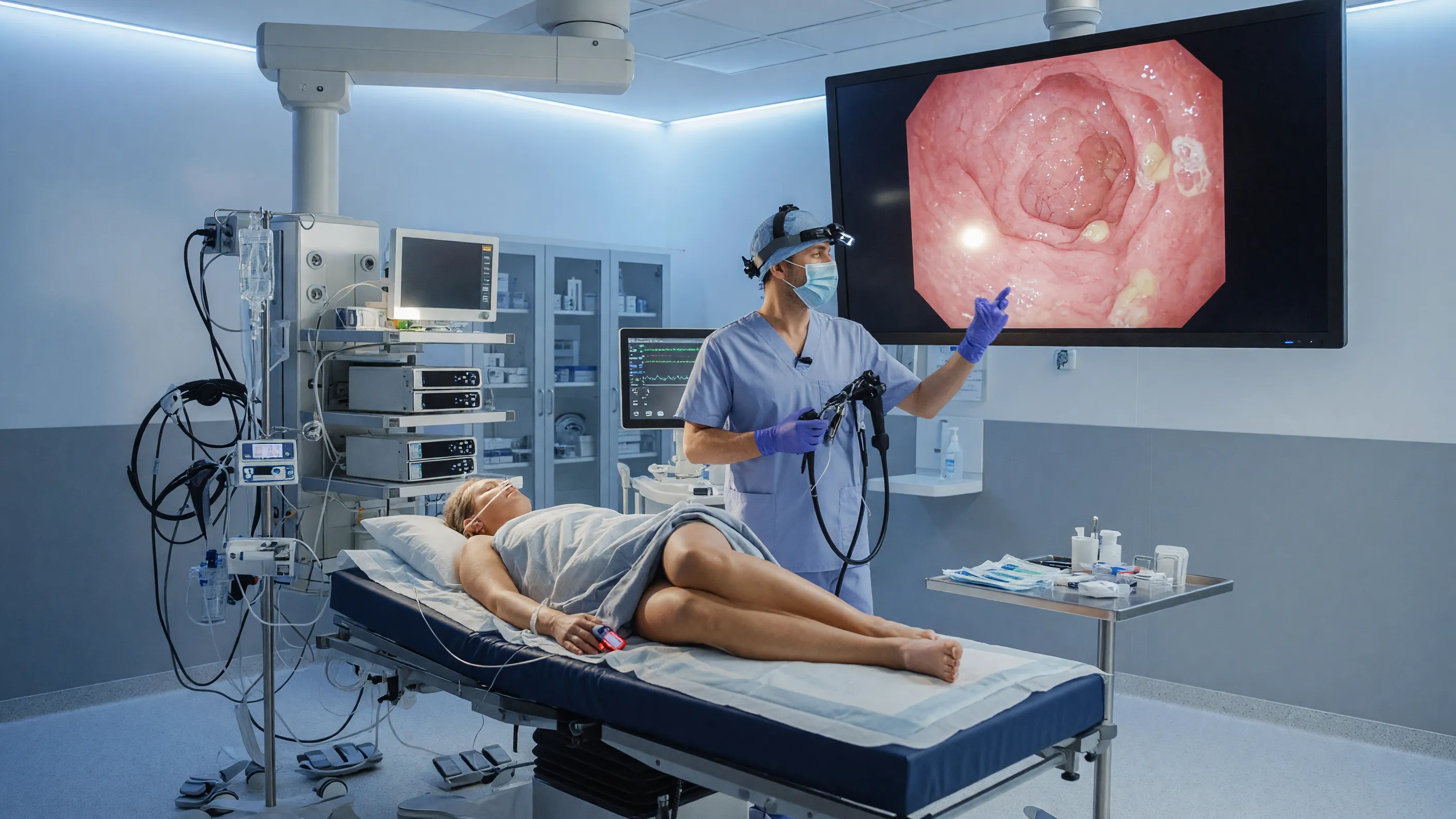
During a colonoscopy for colon polyps, a doctor guides a thin, flexible camera through your colon to find and remove polyps in a single, painless session under sedation. It usually takes 20-45 minutes and needs a clear bowel first. This article explains each step, from preparation to recovery. You will learn how polyps are detected, removed, and tested, plus what your results mean. We also cover risks, aftercare, and when to schedule follow-up screening. Understanding the process helps reduce anxiety and encourages timely colon cancer prevention. Read on to know exactly what to expect before, during, and after the test.
What Is a Colonoscopy for Colon Polyps?
A colonoscopy is a procedure that examines the inner lining of your large intestine using a flexible tube with a camera. It is the gold standard for finding and removing colon polyps.
Polyps are small growths that can turn cancerous over time. Detecting them early is key.
During the exam, the doctor can:
- View the entire colon lining
- Spot polyps of any size
- Remove growths on the spot
- Take tissue samples for testing
Learn more about colon polyps and screening at Lux Hospitals.
Why You May Need One
Your doctor may recommend a colonoscopy for screening, symptoms, or follow-up. It plays a vital role in colon cancer prevention.
Many polyps cause no symptoms, so routine screening matters after age 45.
Common reasons include:
- Routine colon cancer screening
- Blood in the stool
- Family history of colon cancer
- Changes in bowel habits
- Unexplained anemia or weight loss
- Monitoring known polyps
Preparing for Your Colonoscopy
Good preparation ensures a clear view of your colon. A clean bowel improves accuracy and reduces repeat tests.
Your care team gives detailed instructions a few days ahead.
Typical bowel prep steps include:
- Low-fiber diet a few days before
- Clear liquids the day before
- Laxative solution to empty the bowel
- Fasting after midnight
- Adjusting certain medications
Ask the Lux Hospitals team for personalised prep guidance before your test.
What Happens on the Day
You arrive at the hospital and complete a quick check-in. A nurse reviews your health history and starts an IV line.
Sedation keeps you comfortable and relaxed throughout.
Before the procedure you can expect:
- Confirming your consent form
- Changing into a gown
- Monitoring of vital signs
- Sedation or light anesthesia
- Positioning on your left side
During the Procedure: Step by Step
Once sedated, the doctor gently inserts the colonoscope through the rectum. Air or carbon dioxide expands the colon for a clearer view.
The camera sends live images to a screen. The whole exam usually lasts 20 to 45 minutes.
Key steps include:
- Advancing the scope to the colon's end
- Inspecting the lining carefully
- Locating and measuring polyps
- Removing or sampling suspicious tissue
- Withdrawing the scope slowly
How Polyps Are Removed
Most polyps are removed during the same colonoscopy through a procedure called polypectomy. Larger growths may need endoscopic mucosal resection.
Removal is painless because the colon lining has no pain nerves.
Common removal methods include:
- Wire snare to loop and cut
- Electric current to seal vessels
- Biopsy forceps for tiny polyps
- Endoscopic mucosal resection for large ones
Explore advanced polyp removal options at Lux Hospitals for safe, complete treatment.
After the Colonoscopy
You rest in a recovery area as sedation wears off. Mild bloating or gas is normal and passes quickly.
Arrange for someone to drive you home, as sedation affects reflexes.
Aftercare tips include:
- Eat light, easy foods first
- Stay hydrated
- Avoid driving for 24 hours
- Resume medications as advised
- Watch for warning signs
Understanding Your Polyp Results
Removed polyps are sent to a lab for analysis. Results guide how soon you need your next screening.
Most polyps are benign, but testing confirms their type.
Results may reveal:
- Hyperplastic polyps — usually harmless
- Adenomatous polyps — pre-cancerous
- Serrated polyps — variable risk
- Signs pointing to colon cancer or rectal cancer
Discuss your biopsy results with a specialist at Lux Hospitals for a clear follow-up plan.
Risks and Complications
Colonoscopy is very safe, and serious problems are rare. Knowing the signs helps you respond quickly.
Most people recover fully within a day.
Contact your doctor if you notice:
- Heavy rectal bleeding
- Severe abdominal pain
- Fever or chills
- Persistent bloating or vomiting
- Dizziness or weakness
Treatment Options at Lux Hospitals
When polyps are large, numerous, or cancerous, further treatment may be needed. Our specialists tailor care to your findings.
Options range from minimally invasive to surgical.
Treatments we offer include:
- Polypectomy during colonoscopy
- Endoscopic mucosal resection
- Partial colectomy for advanced cases
- Colorectal surgery when required
- Chemotherapy or radiation if cancer is found
Book a consultation at Lux Hospitals to plan the right treatment for your polyps.
Why Choose Lux Hospitals?
Lux Hospitals combines expert gastroenterologists with advanced endoscopy technology. Our team focuses on comfort, accuracy, and early detection.
We support you from prep to follow-up.
Patients choose us for:
- Experienced colorectal specialists
- Modern, sterile endoscopy suites
- Painless sedation techniques
- Fast, reliable biopsy reporting
- Personalised screening schedules
Conclusion
A colonoscopy for colon polyps is a straightforward, well-tolerated procedure that can prevent colon cancer by catching growths early. From careful bowel prep to gentle sedation, each step is designed for your safety and comfort. Polyps are usually removed in the same session, and results guide your future screening schedule.
Don't let anxiety delay this life-saving test. Regular screening remains the most effective way to protect your colon health, especially if you have a family history or symptoms. If you are due for a colonoscopy or have concerns about polyps, the experienced specialists at Lux Hospitals are ready to help with expert, compassionate care.