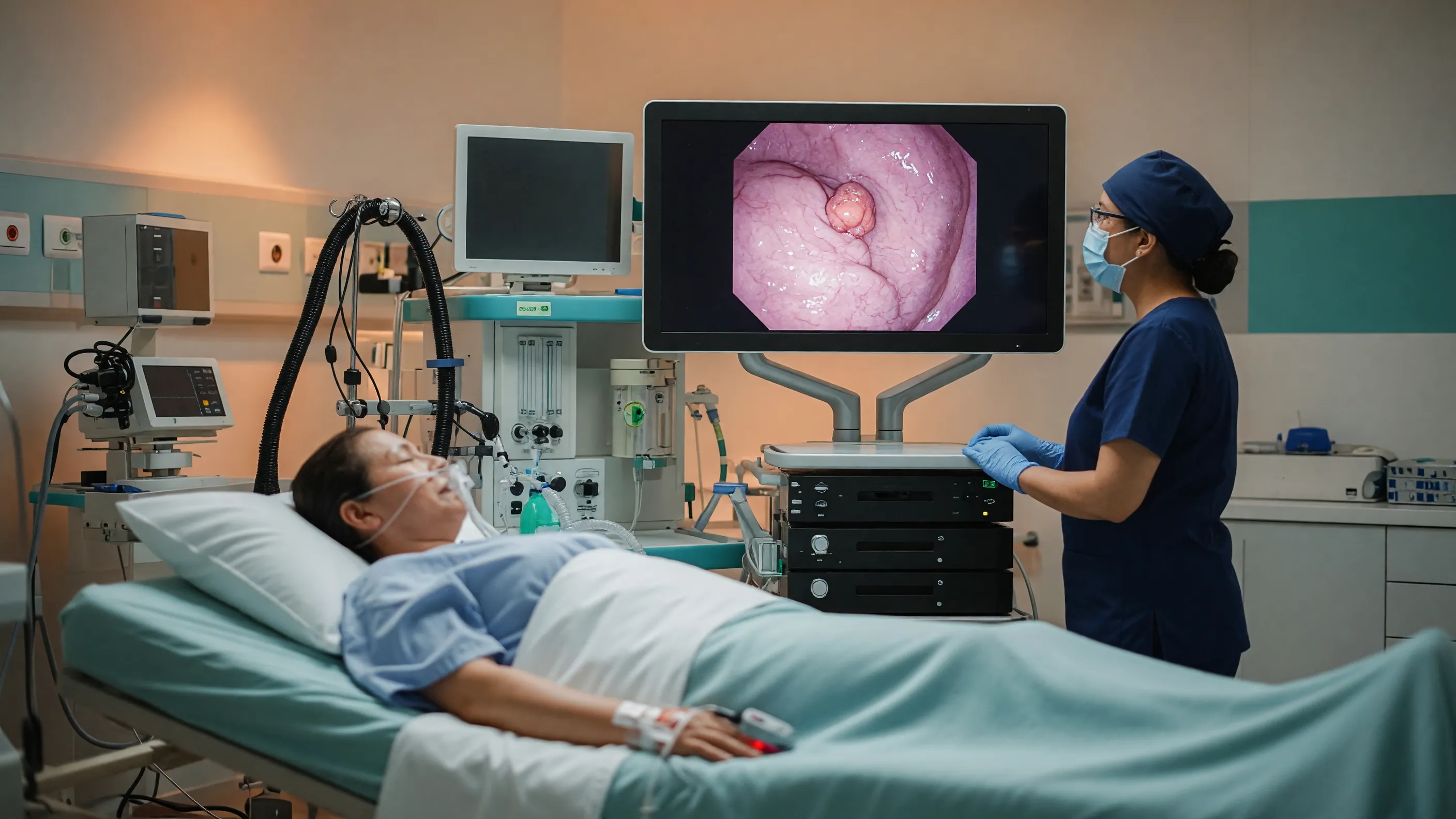
Most colon polyps should be removed as soon as they are found, usually during the same colonoscopy. Early colon polyp removal is one of the most effective ways to prevent colorectal cancer, because many cancers begin as harmless-looking polyps. Doctors remove nearly all polyps since they cannot always tell which ones may turn cancerous just by looking. In this guide, you will learn which polyps carry the highest risk, warning signs, how removal works, and what recovery looks like. We also explain follow-up colonoscopy schedules and how the specialists at Lux Hospitals approach treatment.
What Are Colon Polyps?
Colon polyps are small clumps of cells that grow on the inner lining of the large intestine. Most are harmless, but some can slowly change into cancer over many years.
You can read more about colon polyps and how they form. Polyps commonly vary by:
Knowing the type and size of a polyp helps your doctor decide on the right next step.
- Size, from a few millimetres to several centimetres
- Shape, either stalked (pedunculated) or flat (sessile)
- Location in the colon or rectum
- Cell type seen under a microscope
Why Colon Polyp Removal Matters
Most colorectal cancers develop from polyps that grew unnoticed. Removing polyps early interrupts this process before cancer has a chance to form.
Key benefits of timely removal include:
Polyp removal is a cornerstone of colorectal cancer prevention, not just a diagnostic step.
- Lowers the risk of developing colon cancer
- Allows lab testing of the tissue
- Detects early cancer when most treatable
- Often done during the same colonoscopy
- Usually avoids the need for major surgery
Protect your colon health—schedule a screening colonoscopy at Lux Hospitals today.
When Should Colon Polyps Be Removed?
In practice, doctors remove almost every polyp they find during a colonoscopy. Visual appearance alone cannot reliably rule out precancerous changes.
Removal is especially important when a polyp is:
Very tiny polyps in the rectum may occasionally be left, but this is a specialist decision made case by case.
- An adenoma or sessile serrated lesion
- Larger than 10 millimetres
- Flat, irregular, or ulcerated in appearance
- Causing bleeding or other symptoms
- Found in someone with inflammatory bowel disease
- Showing suspicious features on imaging
Types of Polyps and Their Cancer Risk
Not all polyps behave the same way. Their cell type largely determines how urgently they need attention and how often you need follow-up.
Common polyp types include:
Larger adenomas and those with high-grade changes carry the greatest risk, which is why they are removed completely.
- Adenomatous polyps — most common precancerous type
- Sessile serrated polyps — flat, can become cancerous
- Hyperplastic polyps — usually low risk
- Inflammatory polyps — linked to chronic bowel inflammation
- Villous adenomas — higher cancer potential
Symptoms That May Signal Polyps
Most colon polyps cause no symptoms at all. This is why routine colonoscopy screening matters even when you feel well.
When symptoms do appear, you may notice:
These signs can also come from other conditions, so always get them checked by a specialist.
- Blood in the stool or rectal bleeding
- Change in bowel habits lasting weeks
- Unexplained iron-deficiency anaemia
- Abdominal pain or cramping
- Dark or black stools
Noticed bleeding or bowel changes? Consult the colorectal experts at Lux Hospitals.
Who Is at Higher Risk?
Anyone can develop polyps, but certain factors raise the chance. People at higher risk often need earlier or more frequent screening.
Common risk factors include:
People with ulcerative colitis or Crohn's disease affecting the colon also need closer monitoring, as long-term inflammation raises cancer risk.
- Age 45 years and above
- Family history of polyps or colon cancer
- Inherited syndromes like Lynch syndrome
- Smoking and heavy alcohol use
- Obesity and low physical activity
- Diet high in red or processed meat
How Polyps Are Found: Screening and Diagnosis
Colonoscopy is the gold standard because it finds and removes polyps in one session. Other tests can flag a possible problem first.
Common screening and diagnostic tools include:
If any non-invasive test is abnormal, a colonoscopy is usually the next step for diagnosis and removal.
- Colonoscopy — view and remove polyps
- Stool tests like FIT for hidden blood
- CT colonography (virtual colonoscopy)
- Flexible sigmoidoscopy of the lower colon
- Biopsy and lab analysis of tissue
Colon Polyp Removal Techniques
The removal method depends on a polyp's size, shape, and location. Most are removed painlessly during colonoscopy under sedation.
Treatment options at Lux Hospitals include:
Your specialist will recommend the safest technique based on your colonoscopy findings.
- Polypectomy — snare or forceps for most polyps
- Cold snare — preferred for small polyps
- Endoscopic mucosal resection — for large, flat lesions
- Endoscopic submucosal dissection — selected complex lesions
- Partial colectomy — when endoscopic removal isn't possible
Explore advanced, minimally invasive polyp treatment with the specialists at Lux Hospitals.
Recovery and Possible Risks
Most people go home the same day after polyp removal. Mild bloating or cramping usually settles within a few hours.
Rare but possible risks include:
Seek urgent care for heavy bleeding, severe abdominal pain, or fever after the procedure.
- Bleeding, sometimes delayed by days
- Perforation, a small tear in the bowel
- Post-polypectomy syndrome with pain and fever
- Reaction to sedation medicines
- Temporary bloating from air used
Follow-Up Surveillance After Removal
Removing a polyp does not end your care. People who have had polyps are more likely to grow new ones.
Your follow-up schedule usually depends on:
If a polyp shows cancer, your team may discuss colon cancer treatment, which can include colorectal surgery.
- Number of polyps removed
- Size and cell type of each polyp
- Whether removal was complete or piecemeal
- Family history and personal risk factors
- Quality of bowel preparation
Why Choose Lux Hospitals?
Lux Hospitals offers complete care for colon polyps, from screening to advanced removal and follow-up. Our team focuses on safety, comfort, and clear communication.
Patients choose us for:
We guide you through every step so you feel informed and confident about your care.
- Experienced gastrointestinal and colorectal specialists
- Advanced endoscopy and minimally invasive surgery
- Same-day polyp removal during colonoscopy
- Personalised surveillance plans
- Coordinated care for complex cases
Book your consultation at Lux Hospitals and take charge of your colon health.
Conclusion
So, when should colon polyps be removed? In most cases, as soon as they are found. Timely colon polyp removal stops many cancers before they start and gives doctors tissue to test for warning changes. Because polyps rarely cause symptoms, regular screening from age 45, or earlier if you are at higher risk, is your best protection.
After removal, keep up with the follow-up colonoscopy schedule your doctor recommends, and report any bleeding or bowel changes promptly. Every person's risk is different, so speak with a qualified specialist about your situation. The colorectal team at Lux Hospitals is ready to help with screening, removal, and long-term care.