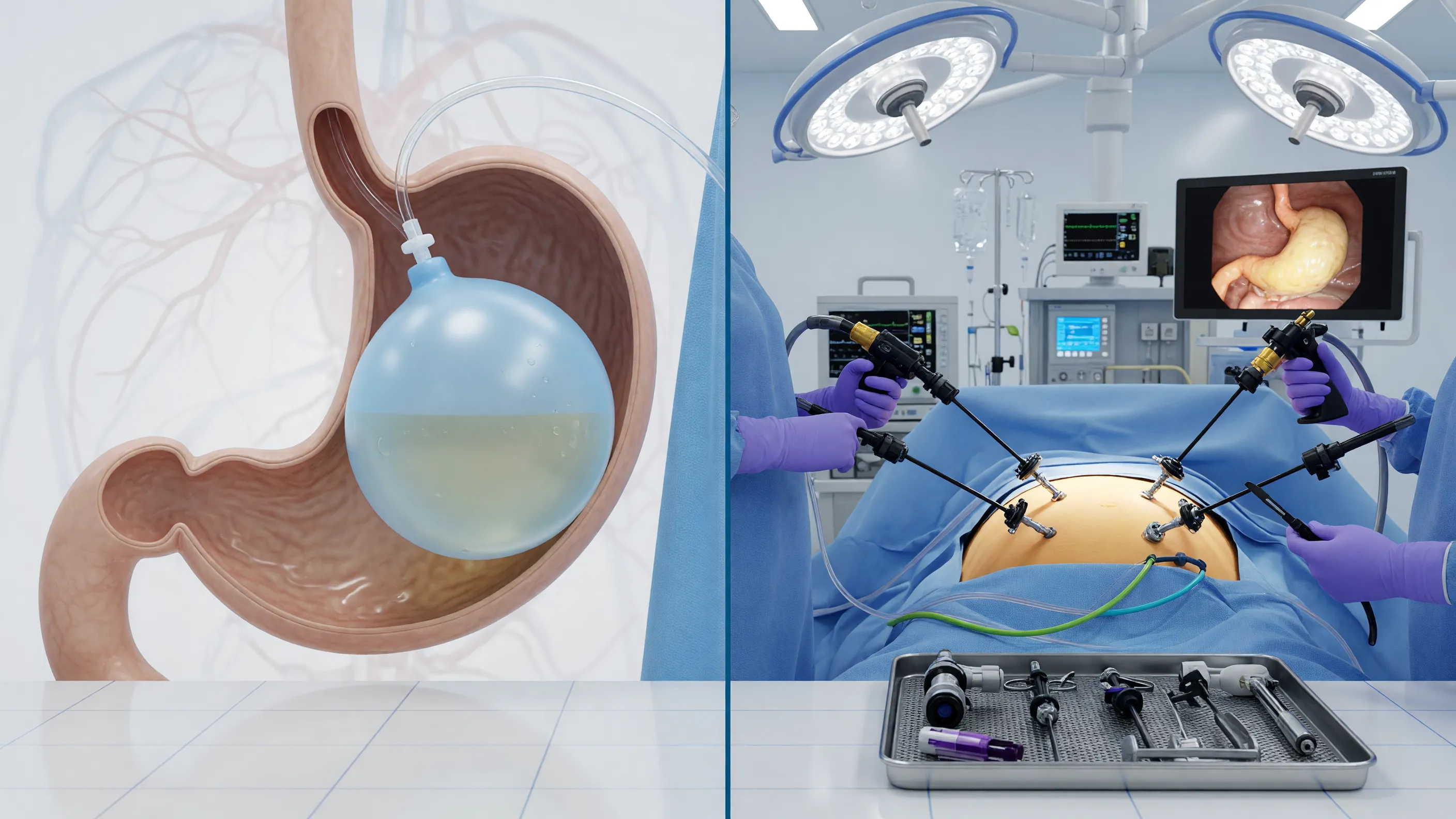
The main difference is simple: a gastric balloon is a temporary, non-surgical device placed inside the stomach for about six months, while bariatric surgery permanently changes the stomach or intestines for lasting weight loss. The balloon suits people with a lower BMI seeking a reversible option, whereas surgery targets severe obesity. This article compares gastric balloon vs bariatric surgery across eligibility, procedure, weight loss results, risks, recovery and cost. We also explain how specialists choose the right approach, so you can make an informed decision with your doctor.
What Is a Gastric Balloon?
A gastric balloon is a soft silicone device placed in the stomach through the mouth using an endoscope. Once inside, it is filled with saline or gas to reduce stomach space.
It makes you feel full sooner, so you eat less. The device is temporary and usually removed after about six months.
Key features include:
- Non-surgical, no incisions needed
- Placed and removed via endoscopy
- Temporary, worn about six months
- Reduces hunger and portion size
- Fully reversible option
Learn more about the gastric balloon procedure at Lux Hospitals.
What Is Bariatric Surgery?
Bariatric surgery permanently alters the digestive system to promote significant, long-term weight loss. It is done laparoscopically in most cases.
These operations either shrink the stomach or reroute the intestines to limit food intake and absorption.
Common types include:
- Sleeve gastrectomy — removes part of stomach
- Roux-en-Y gastric bypass — reroutes intestine
- Mini gastric bypass — simpler bypass
- Gastric banding — adjustable stomach band
- Metabolic surgery for diabetes control
Explore the full range of bariatric procedures with our specialists.
Key Differences at a Glance
The two approaches differ in how invasive they are, how long they last, and how much weight you lose. Understanding these helps set expectations.
Here are the main contrasts between gastric balloon vs bariatric surgery:
- Balloon — non-surgical; surgery — operative
- Balloon — temporary; surgery — permanent
- Balloon — modest weight loss; surgery — major
- Balloon — quick recovery; surgery — longer
- Balloon — lower BMI; surgery — severe obesity
Not sure which fits you? Book a consultation at Lux Hospitals.
Who Is Eligible for Each?
Eligibility depends largely on your body mass index (BMI) and health conditions. A specialist assessment confirms suitability.
Gastric balloons suit people with a lower BMI, while surgery targets more severe obesity.
Typical eligibility guidelines:
- Balloon — BMI around 27–35
- Surgery — BMI 35+ or 40+
- Failed diet and exercise attempts
- Obesity-related conditions like diabetes
- Commitment to lifestyle change
Weight Loss Results Compared
Bariatric surgery produces greater and more durable weight loss than a gastric balloon. However, results depend on lifestyle changes too.
Balloons offer a helpful jumpstart, while surgery delivers long-term transformation, especially useful in bariatric surgery for type 2 diabetes.
Expected outcomes vary:
- Balloon — often 10–15% body weight
- Sleeve gastrectomy — significant, lasting loss
- Gastric bypass — highest weight reduction
- Balloon results fade if habits return
- Surgery supports permanent metabolic change
Risks and Side Effects
Every option carries risks, though they differ in severity. Balloons have fewer serious complications overall.
Discuss your medical history, including any acid reflux, with your doctor before deciding.
Possible risks include:
- Balloon — nausea, cramping, reflux
- Balloon — rare deflation or migration
- Surgery — bleeding or infection
- Surgery — nutritional deficiencies
- Surgery — leaks needing follow-up care
Discuss your risk profile with the experienced team at Lux Hospitals.
Recovery and Lifestyle Changes
Recovery time differs sharply between the two. Balloon patients return to routine quickly, while surgery needs more healing.
Both demand permanent dietary and activity changes for success.
What recovery involves:
- Balloon — home same day, few days adjusting
- Surgery — hospital stay, weeks of recovery
- Gradual return to solid foods
- Lifelong healthy eating habits
- Regular follow-up and monitoring
Which Option Is Right for You?
The best choice depends on your BMI, health goals and willingness for a permanent change. There is no single right answer.
A thorough evaluation guides the decision safely.
Consider these factors:
- Your current BMI and weight goals
- Presence of obesity-related diseases
- Preference for reversible vs permanent
- Readiness for lifestyle commitment
- Specialist recommendation after assessment
Get a personalised weight-loss plan from Lux Hospitals experts.
Treatment Options at Lux Hospitals
Lux Hospitals offers a complete spectrum of obesity treatments under expert supervision. Each plan is tailored to the patient.
Our team uses advanced, minimally invasive techniques for safety and faster recovery.
Procedures available include:
- Endoscopic gastric balloon placement
- Sleeve gastrectomy surgery
- Roux-en-Y and mini gastric bypass
- Adjustable gastric banding
- Metabolic surgery for diabetes
Why Choose Lux Hospitals?
Choosing the right centre matters as much as choosing the procedure. Lux Hospitals combines expertise with compassionate care.
Our multidisciplinary team supports you before, during and after treatment.
What sets us apart:
- Experienced bariatric and endoscopy specialists
- Advanced laparoscopic technology
- Personalised nutrition and follow-up care
- Comprehensive obesity management programs
- Focus on long-term patient safety
Begin your weight-loss journey with Lux Hospitals today.
Conclusion
Choosing between a gastric balloon and bariatric surgery comes down to your BMI, health goals and how much change you are ready to make. The gastric balloon offers a reversible, non-surgical jumpstart with modest weight loss, while bariatric surgery delivers greater, longer-lasting results for severe obesity.
Neither option works alone — both require lasting dietary and lifestyle commitment for success. The safest path is a proper evaluation by an experienced specialist who can match the procedure to your needs. At Lux Hospitals, our team guides you through every step, from assessment to recovery, helping you achieve healthier, sustainable weight loss.