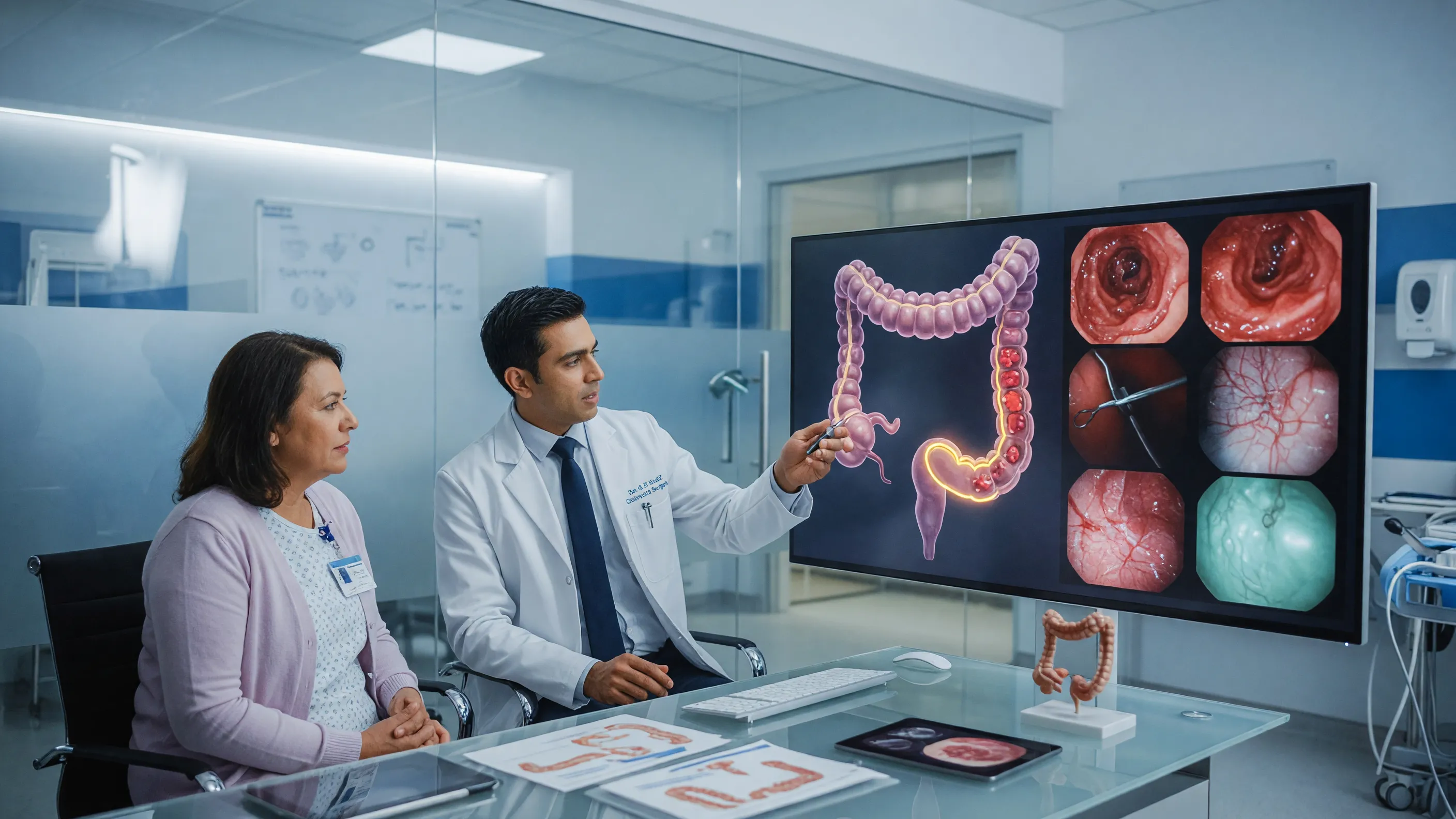
Colon cancer is mainly caused by genetic mutations that make cells in the colon grow uncontrollably, often starting as small polyps that turn cancerous over time. Key risk factors include age, family history, diet, obesity, smoking, and chronic bowel inflammation. While some causes can't be changed, many are linked to lifestyle. This article explains the leading colon cancer causes, the risk factors you should watch for, and practical steps to lower your risk. You'll also learn how doctors diagnose and treat the disease and when to seek expert care at Lux Hospitals.
What Is Colon Cancer?
Colon cancer develops when cells in the large intestine grow abnormally and form a tumour. Most cases begin as small, harmless growths that slowly become cancerous.
It is one of the most common cancers worldwide, but also among the most preventable through screening.
Key facts to understand:
- Starts in the colon or rectum
- Often begins as benign polyps
- Grows slowly over years
- Highly treatable when caught early
- Linked to both genes and lifestyle
Learn more about colon cancer care at Lux Hospitals.
Age and Family History
Age is the strongest unchangeable risk factor, with most cases diagnosed after 50. However, cases in younger adults are rising.
A close relative with colon cancer significantly raises your own risk.
You may be at higher risk if:
- You are over 50 years old
- A parent or sibling had colon cancer
- Multiple relatives had colorectal cancer
- A relative was diagnosed young
- You have a strong family history of polyps
Colon Polyps and Precancerous Growths
Most colon cancers begin as polyps, small clumps of cells on the colon lining. Over years, some polyps turn malignant.
Finding and removing them early is one of the best ways to prevent cancer.
Factors that raise polyp risk include:
- Large or numerous polyps
- Certain polyp types (adenomas)
- Older age
- Family history of growths
- Chronic bowel inflammation
Ask Lux Hospitals about screening to detect and remove colon polyps early.
Diet and Lifestyle Factors
What you eat strongly influences colon cancer risk. Diets heavy in processed and red meat are repeatedly linked to higher rates.
Low fibre intake also plays a role by slowing digestion and waste removal.
Dietary habits that increase risk include:
- High red and processed meat intake
- Low fibre, fruit and vegetable intake
- Excess alcohol consumption
- Diets high in fried, fatty foods
- Very low whole-grain intake
Obesity and Physical Inactivity
Carrying excess weight raises the risk of colon cancer and makes outcomes worse. Fat tissue affects hormones and inflammation that fuel cancer growth.
A sedentary lifestyle compounds the problem.
Ways weight and inactivity raise risk:
- Chronic low-grade inflammation
- Insulin resistance and high blood sugar
- Hormonal imbalances
- Slower bowel movement
- Reduced immune surveillance
Explore bariatric and metabolic care at Lux Hospitals to manage obesity-related risk.
Inflammatory Bowel Disease
Long-standing inflammation of the colon damages the lining and raises cancer risk over time. The longer and more severe the disease, the greater the danger.
Two main conditions increase risk the most.
Conditions linked to higher colon cancer risk:
- Crohns disease affecting the colon
- Ulcerative colitis over many years
- Extensive colon involvement
- Poorly controlled inflammation
- Early-age disease onset
Inherited Genetic Syndromes
A small share of colon cancers stem from inherited gene mutations. These syndromes cause cancer to develop earlier and more aggressively.
Genetic counselling and early screening are vital for affected families.
Known inherited syndromes include:
- Lynch syndrome (HNPCC)
- Familial adenomatous polyposis (FAP)
- Peutz-Jeghers syndrome
- MUTYH-associated polyposis
- Juvenile polyposis syndrome
Talk to Lux Hospitals about genetic risk and earlier screening options.
Other Contributing Risk Factors
Several additional factors can quietly increase your risk. Many relate to long-term lifestyle and health conditions.
Addressing these can meaningfully lower your chances.
Other contributing factors include:
- Smoking tobacco
- Type 2 diabetes
- Heavy alcohol use
- African or certain ethnic backgrounds
- Prior radiation to the abdomen
How to Lower Your Colon Cancer Risk
Many colon cancer causes are linked to habits you can change. Small, consistent steps make a real difference.
Regular screening remains the single most powerful tool.
Practical prevention steps:
- Eat more fibre, fruits and vegetables
- Limit red and processed meats
- Stay physically active
- Maintain a healthy weight
- Quit smoking and limit alcohol
- Get screened as advised
Book a preventive colon screening with the specialists at Lux Hospitals.
Diagnosis and Treatment at Lux Hospitals
Colon cancer is diagnosed through colonoscopy, imaging and tissue biopsy. Early detection allows less invasive, more successful treatment.
Treatment depends on the stage and location of the tumour.
Common diagnosis and treatment options:
- Colonoscopy with polypectomy
- Endoscopic mucosal resection for early tumours
- Partial colectomy or colorectal surgery
- Chemotherapy for advanced cases
- Radiation therapy when indicated
Why Choose Lux Hospitals?
Lux Hospitals offers advanced, patient-centred care for colon and rectal conditions. Our specialists combine early detection with minimally invasive treatment.
We also manage related conditions like rectal cancer and polyps.
What sets our care apart:
- Experienced colorectal surgical team
- Advanced screening and endoscopy
- Minimally invasive surgery options
- Personalised treatment plans
- Comprehensive follow-up care
Schedule your consultation with Lux Hospitals' colorectal experts today.
Conclusion
Colon cancer rarely has a single cause—it usually results from a mix of genetics, age, diet, and lifestyle. The good news is that many risk factors are within your control, and regular screening can catch the disease early or even prevent it entirely.
Understanding your personal risk is the first step toward protection. If you have a family history, chronic bowel disease, or worrying symptoms, don't wait. Early action saves lives. The expert colorectal team at Lux Hospitals offers advanced screening, accurate diagnosis, and comprehensive treatment tailored to you. Take charge of your health today and consult our specialists for personalised guidance and peace of mind.