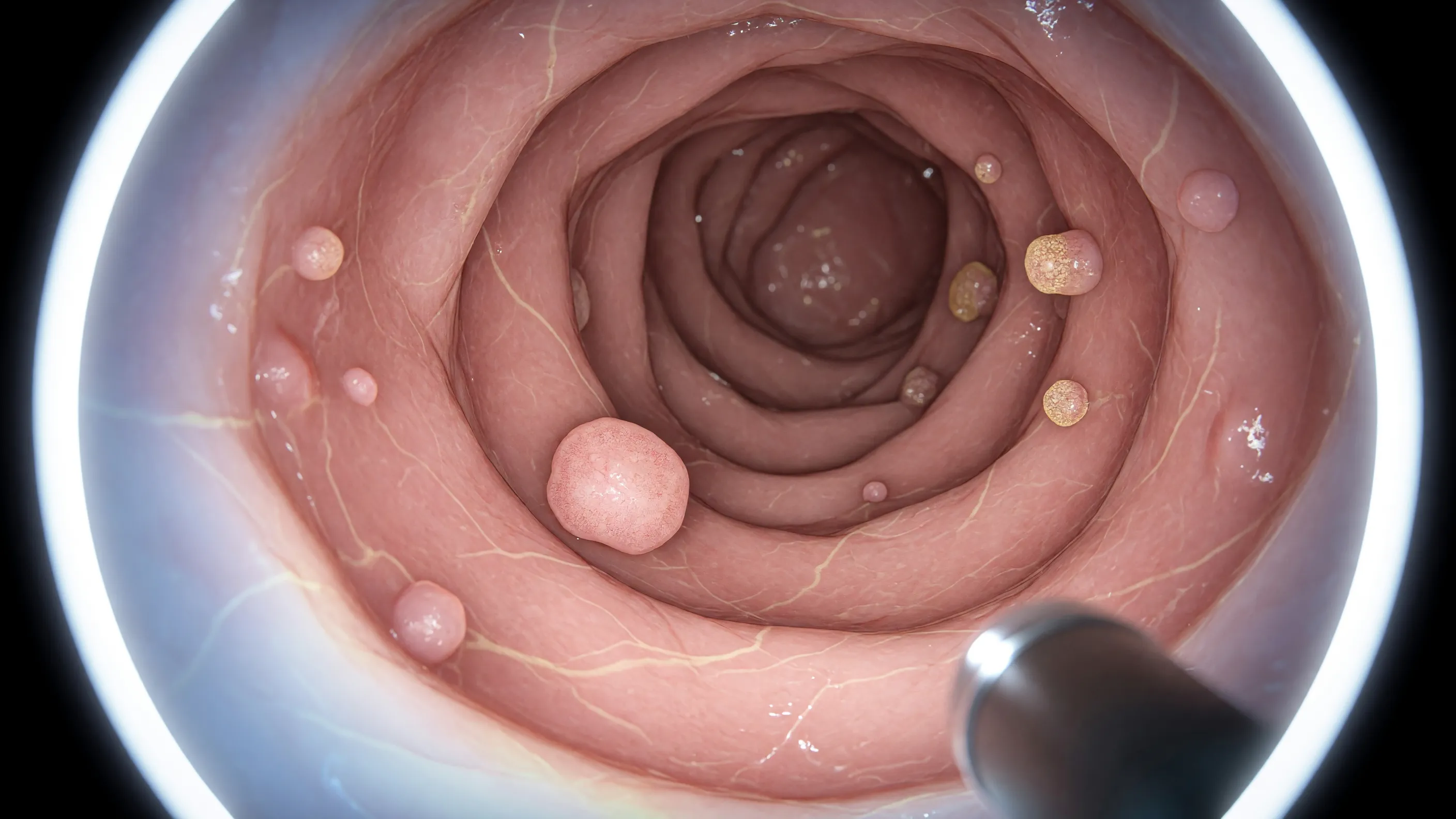
Colon polyps are caused mainly by genetic changes in the colon lining that make cells grow abnormally, often triggered by age, family history, diet, and lifestyle factors. Most polyps are harmless, but some can slowly turn into cancer if left untreated. In this article, we explain the common colon polyp causes, the leading risk factors, warning signs, and practical prevention steps. We also cover screening, diagnosis, and treatment options at Lux Hospitals. Understanding these factors helps you lower your risk and protect long-term colon health.
What Are Colon Polyps?
Colon polyps are small growths that form on the inner lining of the large intestine or rectum. Most are non-cancerous, but certain types can develop into cancer over time.
They vary in shape and size, from tiny flat spots to larger mushroom-like lumps.
Common polyp types include:
- Adenomatous polyps — most likely to turn cancerous
- Hyperplastic polyps — usually harmless
- Sessile serrated polyps — carry some cancer risk
- Inflammatory polyps — linked to bowel disease
Learn more about colon polyps and expert care at Lux Hospitals.
What Causes Colon Polyps?
Colon polyps form when healthy cells in the colon lining undergo genetic mutations. These changes make cells divide and grow when they should not, creating a polyp.
Several triggers can drive this abnormal cell growth.
Common underlying causes include:
- Gene mutations in colon cells
- Chronic inflammation of the bowel
- Aging and cellular wear
- Family history of polyps
- Poor diet and lifestyle habits
Genetic and Inherited Causes
Some people inherit gene changes that greatly raise their polyp risk. These inherited syndromes can cause hundreds of polyps at a young age.
A strong family history matters even without a named syndrome.
Inherited conditions linked to polyps include:
- Familial adenomatous polyposis (FAP)
- Lynch syndrome
- Peutz-Jeghers syndrome
- Serrated polyposis syndrome
- Close relatives with colon cancer
Book a genetic risk assessment at Lux Hospitals if polyps run in your family.
Lifestyle and Dietary Causes
Everyday habits strongly influence polyp formation. Diets high in fat and red meat, and low in fibre, promote unhealthy cell changes in the colon.
Smoking and alcohol add further damage over time.
Lifestyle factors that raise your risk include:
- High red and processed meat intake
- Low fibre, fruit and vegetable intake
- Smoking tobacco regularly
- Heavy alcohol consumption
- Obesity and physical inactivity
Key Risk Factors for Colon Polyps
Certain factors make polyps more likely, even in otherwise healthy people. Some you can change, while others you cannot.
Age is one of the strongest predictors of polyp development.
Major risk factors include:
- Being over age 50
- Personal or family history of polyps
- Type 2 diabetes, poorly controlled
- Inflammatory bowel disease
- Chronic conditions such as ulcerative colitis
- Sedentary lifestyle and excess weight
Concerned about your risk? Schedule a colon health check at Lux Hospitals.
Warning Signs and Symptoms
Most colon polyps cause no symptoms and are found during screening. When symptoms appear, they should never be ignored.
Larger polyps may bleed or disturb bowel habits.
Possible warning signs include:
- Blood in the stool
- Persistent change in bowel habits
- Abdominal pain or cramps
- Unexplained fatigue or anaemia
- Rectal bleeding or mucus
Complications If Left Untreated
Untreated polyps can slowly progress to serious disease. Adenomatous polyps carry the greatest long-term danger.
Early removal prevents most of these complications.
Risks of ignoring polyps include:
- Progression to colon cancer
- Spread to nearby rectal tissue
- Chronic bleeding and anaemia
- Bowel obstruction from large polyps
- Link with rectal cancer over time
Don't delay screening—early detection at Lux Hospitals can be life-saving.
How to Prevent Colon Polyps
You cannot change your genes, but you can lower your risk with healthy choices. Diet, weight, and screening all play major roles.
Small daily habits make a lasting difference.
Proven prevention steps include:
- Eat more fibre, fruits and vegetables
- Limit red and processed meat
- Quit smoking and reduce alcohol
- Stay active and maintain healthy weight
- Attend regular colonoscopy screening
Diagnosis and Screening
Colonoscopy is the gold standard for finding and removing polyps. It lets doctors view the entire colon and treat polyps in the same session.
Screening usually begins at age 45–50, or earlier with risk factors.
Common diagnostic methods include:
- Colonoscopy with polyp removal
- Stool-based blood tests
- CT colonography imaging
- Biopsy for tissue analysis
- Family risk and genetic evaluation
Book your colonoscopy screening with the specialists at Lux Hospitals.
Treatment Options at Lux Hospitals
Most polyps are removed painlessly during colonoscopy. Larger or high-risk growths may need advanced surgical techniques.
Our team tailors treatment to polyp size, type, and cancer risk.
Treatment options may include:
- Polypectomy during colonoscopy
- Endoscopic mucosal resection for larger polyps
- Partial colectomy for extensive disease
- Colorectal surgery for cancerous polyps
- Ongoing monitoring after removal
Why Choose Lux Hospitals?
Lux Hospitals combines expert gastroenterologists with advanced, minimally invasive technology. We focus on early detection and safe, complete polyp removal.
Our patient-centred approach guides you from screening to recovery.
What sets us apart:
- Experienced colorectal specialists
- State-of-the-art endoscopy suites
- Personalised prevention and screening plans
- Comprehensive care for colon cancer
- Compassionate follow-up support
Protect your colon health—consult the experts at Lux Hospitals today.
Conclusion
Colon polyps develop from genetic changes in the colon lining, shaped by age, family history, diet, and lifestyle. While many polyps are harmless, some can quietly progress to cancer, which is why understanding colon polyp causes matters so much.
The good news is that most polyps are preventable and treatable when caught early. A fibre-rich diet, healthy weight, avoiding tobacco, and timely colonoscopy screening dramatically lower your risk. If you have symptoms or a family history, don't wait. The specialists at Lux Hospitals offer expert screening, safe polyp removal, and complete colorectal care to protect your long-term health.