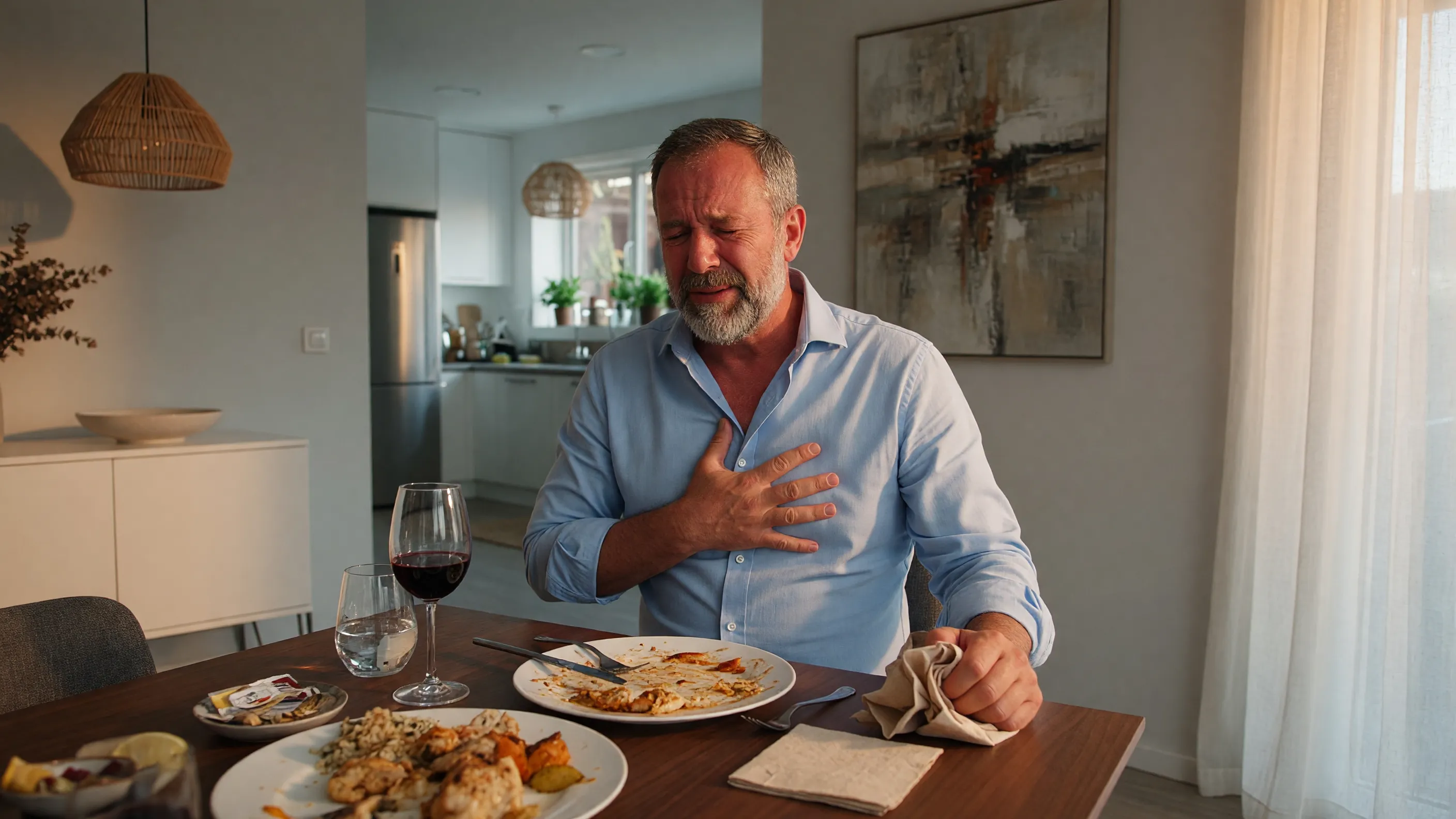
Heartburn after eating happens when stomach acid flows back into your esophagus, usually because the valve between them relaxes or gets overloaded after a large or fatty meal. This causes a burning feeling in your chest or throat. Occasional heartburn is common and harmless, but frequent episodes may signal acid reflux or GERD. In this article, we explain the main heartburn after eating causes, common food and lifestyle triggers, warning signs to watch, and how doctors diagnose and treat it. You will also learn simple prevention tips and when to see a specialist.
What Is Heartburn After Eating?
Heartburn is a burning discomfort behind the breastbone that often appears after meals. It happens when acidic stomach contents rise into the esophagus.
A muscle called the lower esophageal sphincter normally keeps acid down. When it weakens or relaxes, reflux occurs.
Common features include:
- Burning chest or throat sensation
- Sour or bitter taste in mouth
- Discomfort worsening when bending over
- A feeling of food coming back up
Struggling with frequent burning after meals? Book a consultation at Lux Hospitals today.
1. Eating Too Much Too Fast
Large meals stretch the stomach and increase pressure on the esophageal valve. This makes acid escape upward more easily.
Eating quickly also means swallowing air and overloading digestion, which worsens the problem.
Habits that raise your risk:
- Very large portion sizes
- Eating in a rush
- Not chewing food properly
- Heavy late-night dinners
- Tight belts or clothing after meals
2. Trigger Foods and Drinks
Certain foods relax the valve or increase stomach acid, sparking heartburn soon after eating.
Spicy, fatty, and acidic items are the most common culprits.
Frequent trigger foods include:
- Fried and fatty foods
- Spicy dishes and chillies
- Citrus fruits and tomatoes
- Coffee, tea, and cola
- Chocolate and peppermint
- Alcohol and carbonated drinks
Notice certain foods always trigger burning? Let a Lux Hospitals gastroenterologist help.
3. Lying Down After Meals
Gravity helps keep acid in your stomach. Lying down or reclining soon after eating removes that advantage.
This allows acid to flow back into the esophagus more freely.
Risky post-meal habits include:
- Napping right after lunch
- Going to bed within two hours of eating
- Slouching on the couch after dinner
- Bending forward soon after meals
4. Acid Reflux and GERD
When heartburn happens more than twice a week, it may be a sign of GERD acid reflux, a chronic condition needing attention.
GERD develops when the esophageal valve repeatedly fails to close properly.
You may notice:
- Frequent heartburn several times weekly
- Regurgitation of food or sour liquid
- Chronic cough or hoarseness
- Difficulty swallowing
- Chest discomfort after most meals
Persistent reflux needs expert care—schedule an evaluation at Lux Hospitals.
5. Hiatal Hernia
A hiatal hernia occurs when part of the stomach pushes up through the diaphragm. This weakens the barrier against acid.
Small hernias may cause no symptoms, but larger ones often trigger reflux.
Signs linked to a hiatal hernia include:
- Heartburn worsening after meals
- Chest pressure or discomfort
- Belching and regurgitation
- Feeling full quickly
- Symptoms worse when lying flat
Other Causes of Post-Meal Heartburn
Several digestive conditions can mimic or worsen heartburn after eating. Identifying the true cause is important.
These conditions may need targeted treatment.
Warning Signs You Should Not Ignore
Occasional heartburn is usually harmless. But some symptoms suggest a more serious problem that needs prompt care.
Seek medical help if you experience:
- Difficulty or painful swallowing
- Unexplained weight loss
- Vomiting blood or black stools
- Persistent chest pain
- Heartburn not relieved by antacids
Experiencing these red flags? Don't wait—visit Lux Hospitals for an urgent assessment.
How Heartburn Is Diagnosed
Doctors start with your symptoms and eating habits. If reflux is frequent, further tests confirm the cause.
These tests help rule out serious conditions.
Common diagnostic methods include:
- Endoscopy to view the esophagus
- pH monitoring for acid levels
- Esophageal manometry for muscle function
- Barium swallow X-ray
- Biopsy if abnormal tissue is seen
Treatment Options at Lux Hospitals
Most heartburn improves with lifestyle changes and medication. When reflux is severe or a hernia is present, surgery may help.
Our specialists tailor treatment to your diagnosis.
Treatment approaches include:
- Diet and lifestyle modification
- Antacids and acid-reducing medicines
- Laparoscopic fundoplication for GERD
- Open fundoplication for complex cases
- Hiatal hernia repair when needed
Explore lasting relief options—consult the reflux team at Lux Hospitals.
Prevention Tips to Stop Heartburn
Simple daily changes can dramatically reduce heartburn after meals. Prevention is often more effective than medication.
Try these practical steps:
- Eat smaller, frequent meals
- Avoid known trigger foods
- Stay upright after eating
- Maintain a healthy weight
- Raise the head of your bed
- Limit alcohol and smoking
Why Choose Lux Hospitals?
Lux Hospitals offers advanced diagnostics and experienced gastrointestinal specialists under one roof. We focus on accurate diagnosis and personalised care.
Patients choose us for:
- Expert gastroenterologists and surgeons
- Modern endoscopy facilities
- Minimally invasive surgical options
- Personalised treatment plans
- Compassionate, patient-centred care
Take control of your digestive health—book your appointment at Lux Hospitals today.
Conclusion
Heartburn after eating is usually caused by large meals, trigger foods, lying down too soon, or a weakened esophageal valve. For most people, small lifestyle changes bring quick relief. However, frequent heartburn may point to GERD, a hiatal hernia, or another digestive condition that deserves proper evaluation.
Don't dismiss ongoing symptoms, especially if you notice difficulty swallowing, weight loss, or pain. Early diagnosis prevents complications and improves comfort. The specialists at Lux Hospitals can identify the exact cause of your heartburn and offer treatments ranging from medication to advanced minimally invasive surgery. Reach out today to enjoy meals without the burn.