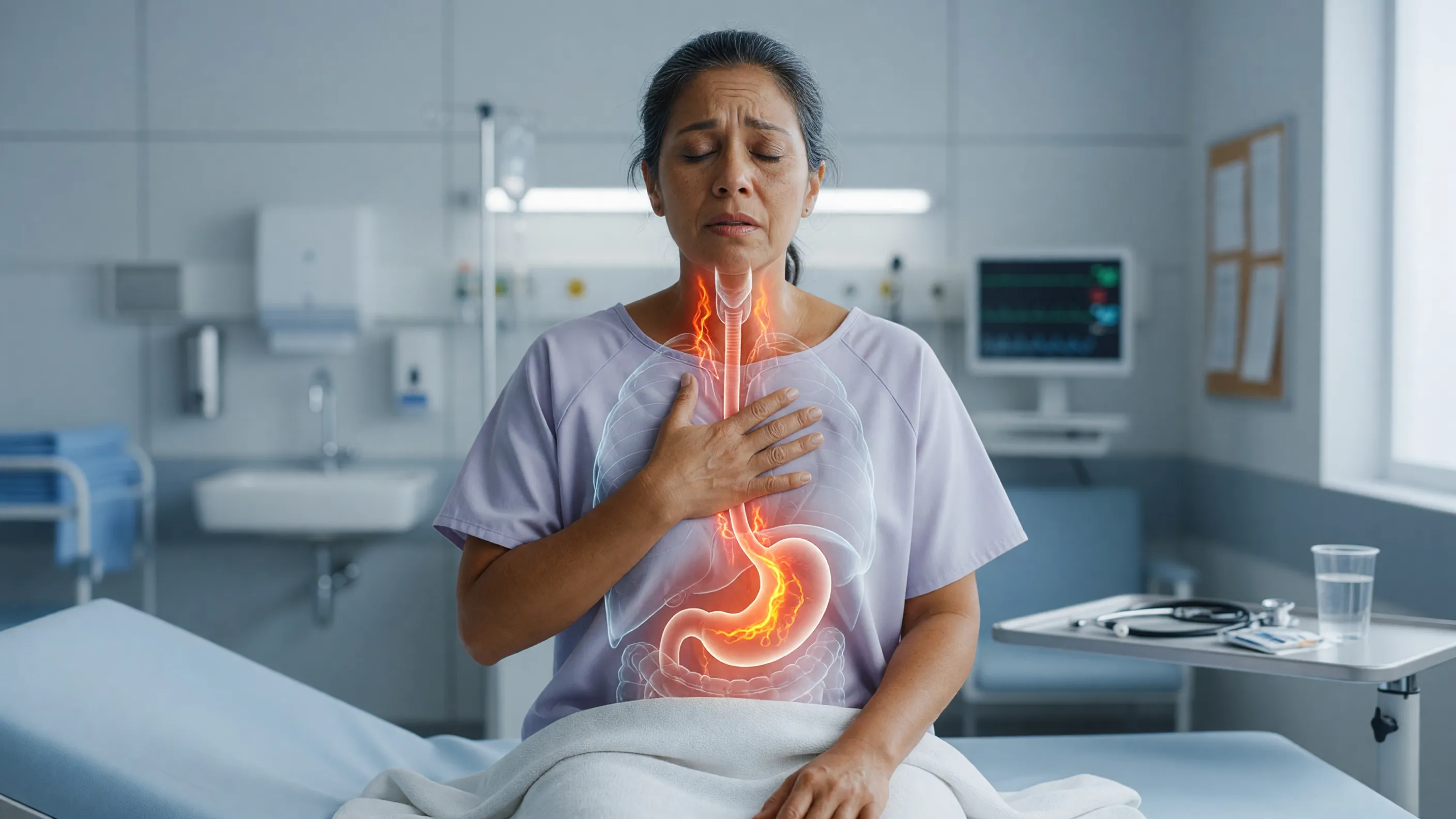
GERD symptoms most commonly include frequent heartburn, acid regurgitation, chest discomfort, and a sour taste in the mouth. Gastroesophageal reflux disease occurs when stomach acid repeatedly flows back into the food pipe, irritating its lining. Left untreated, it can affect your sleep, throat, and overall quality of life. This article explains the common signs of acid reflux, less obvious warning symptoms, causes, complications, and how they are diagnosed. You will also learn about proven treatment options and when to see a specialist at Lux Hospitals for lasting relief.
What Is GERD?
GERD, or gastroesophageal reflux disease, is a chronic condition where stomach acid flows back into the esophagus. This backflow irritates the lining and triggers uncomfortable symptoms.
Occasional reflux is normal, but frequent episodes signal a problem. Understanding acid reflux and its signs helps you seek timely care.
Key facts about GERD include:
- Acid flows back from the stomach
- Symptoms occur twice weekly or more
- Caused by a weak lower esophageal valve
- Can affect all age groups
- Manageable with treatment and lifestyle changes
Struggling with recurring reflux? Consult the digestive experts at Lux Hospitals today.
1. Frequent Heartburn
Heartburn is the most common GERD symptom, felt as a burning sensation behind the breastbone. It often worsens after meals or when lying down.
Many people notice it flaring at night, disrupting sleep. Frequent heartburn is a hallmark sign of chronic acid reflux.
Heartburn typically feels like:
- Burning behind the chest bone
- Worsening after large meals
- Discomfort when bending or lying down
- Flare-ups during sleep
- A rising, warm sensation
2. Acid Regurgitation
Regurgitation is the sensation of stomach acid or food rising into your throat or mouth. It often leaves a sour or bitter taste.
This symptom can happen without warning, especially after eating. Persistent regurgitation strongly suggests GERD rather than occasional indigestion.
You may notice:
- A sour or bitter taste
- Fluid rising into the throat
- Bad breath or acidic mouth
- Symptoms worsening when bending over
- Discomfort after heavy meals
Learn more about GERD and acid reflux care at Lux Hospitals.
3. Chest Pain and Discomfort
GERD can cause chest pain that mimics heart problems. This discomfort usually appears after eating or when lying flat.
While often harmless, chest pain should never be ignored. Sudden or severe chest pain needs urgent medical evaluation.
GERD-related chest discomfort may include:
- Pressure behind the breastbone
- Pain worsening after meals
- Discomfort when reclining
- Relief after antacids
- Tightness mistaken for heart pain
4. Difficulty Swallowing
Difficulty swallowing, called dysphagia, can develop when acid damages the esophagus over time. Food may feel stuck in the chest or throat.
This symptom can overlap with conditions like achalasia cardia, which also affects swallowing. A specialist can distinguish between them.
Watch for these swallowing signs:
- Food feeling stuck in the throat
- Painful swallowing
- Sensation of a lump
- Needing extra water with meals
- Gradual worsening over time
Persistent swallowing trouble? Book an evaluation at Lux Hospitals now.
5. Chronic Cough and Sore Throat
Acid reaching the throat and airways can trigger a lingering cough or hoarseness. These symptoms are often mistaken for allergies or infections.
This form is sometimes called silent reflux because heartburn may be absent. It commonly worsens at night.
Throat and airway signs include:
- Persistent dry cough
- Hoarse or raspy voice
- Frequent throat clearing
- Sore throat in the morning
- Worsening asthma symptoms
Silent and Less Obvious Signs
Not everyone with GERD experiences classic heartburn. Some notice subtle symptoms that are easy to overlook.
Recognizing these hidden signs helps catch reflux early. They often affect the mouth, sleep, and digestion.
Less obvious GERD symptoms include:
- Nausea after eating
- Bloating and frequent burping
- Disrupted or restless sleep
- Dental enamel erosion
- Feeling full quickly
Notice these subtle signs? Get expert reflux care at Lux Hospitals.
Common Causes and Risk Factors
GERD develops when the lower esophageal sphincter weakens or relaxes abnormally. Certain habits and conditions raise your risk.
A hiatal hernia can also push the stomach upward and worsen reflux. Identifying triggers guides better management.
Common causes and risk factors include:
- Obesity or excess weight
- Hiatal hernia
- Smoking and alcohol use
- Spicy, fatty, or fried foods
- Pregnancy and hormonal changes
- Eating large meals late at night
Complications of Untreated GERD
Ignoring chronic acid reflux can damage the esophagus over time. Repeated acid exposure leads to inflammation and scarring.
Some complications increase the risk of more serious conditions. Early treatment helps prevent lasting harm.
Untreated GERD may lead to:
- Esophagitis and inflammation
- Esophageal narrowing (strictures)
- Barrett's esophagus
- Bleeding or ulcers
- Increased cancer risk over time
Don't let reflux damage your esophagus—consult Lux Hospitals early.
How GERD Is Diagnosed
Diagnosis usually begins with a review of your symptoms and medical history. Persistent or severe cases require further testing.
These tests confirm GERD and rule out other digestive conditions like a peptic ulcer. Accurate diagnosis ensures the right treatment.
Common diagnostic methods include:
- Upper endoscopy examination
- 24-hour pH monitoring
- Esophageal manometry
- Barium swallow X-ray
- Symptom and history review
Treatment Options at Lux Hospitals
Most GERD cases improve with lifestyle changes and medication. When symptoms persist, surgery may offer lasting relief.
Surgical options like laparoscopic fundoplication strengthen the valve between the stomach and esophagus. Weight loss procedures may also help obese patients.
Treatment options include:
- Diet and lifestyle modifications
- Acid-reducing medications
- Laparoscopic fundoplication surgery
- Open fundoplication for select cases
- Bariatric surgery for weight-related reflux
Explore proven GERD treatments with the specialists at Lux Hospitals.
Why Choose Lux Hospitals?
Lux Hospitals offers comprehensive, patient-focused care for acid reflux and digestive disorders. Our team combines advanced diagnostics with minimally invasive treatments.
We tailor every plan to your symptoms and lifestyle. From medication to surgery, you receive complete support.
Reasons to choose Lux Hospitals include:
- Experienced gastrointestinal specialists
- Advanced diagnostic technology
- Minimally invasive surgical options
- Personalized treatment plans
- Compassionate follow-up care
Conclusion
GERD symptoms range from obvious heartburn and regurgitation to subtle signs like chronic cough, hoarseness, and disturbed sleep. Recognizing these signs early is the key to preventing complications such as esophageal damage and Barrett's esophagus.
If you experience frequent acid reflux, don't dismiss it as ordinary indigestion. Persistent symptoms deserve a proper evaluation by a specialist. With the right combination of lifestyle changes, medication, and modern surgical options, most patients find lasting relief. The experienced team at Lux Hospitals can accurately diagnose your condition and design a treatment plan suited to your needs. Take control of your digestive health and seek expert care before minor discomfort becomes a serious problem.