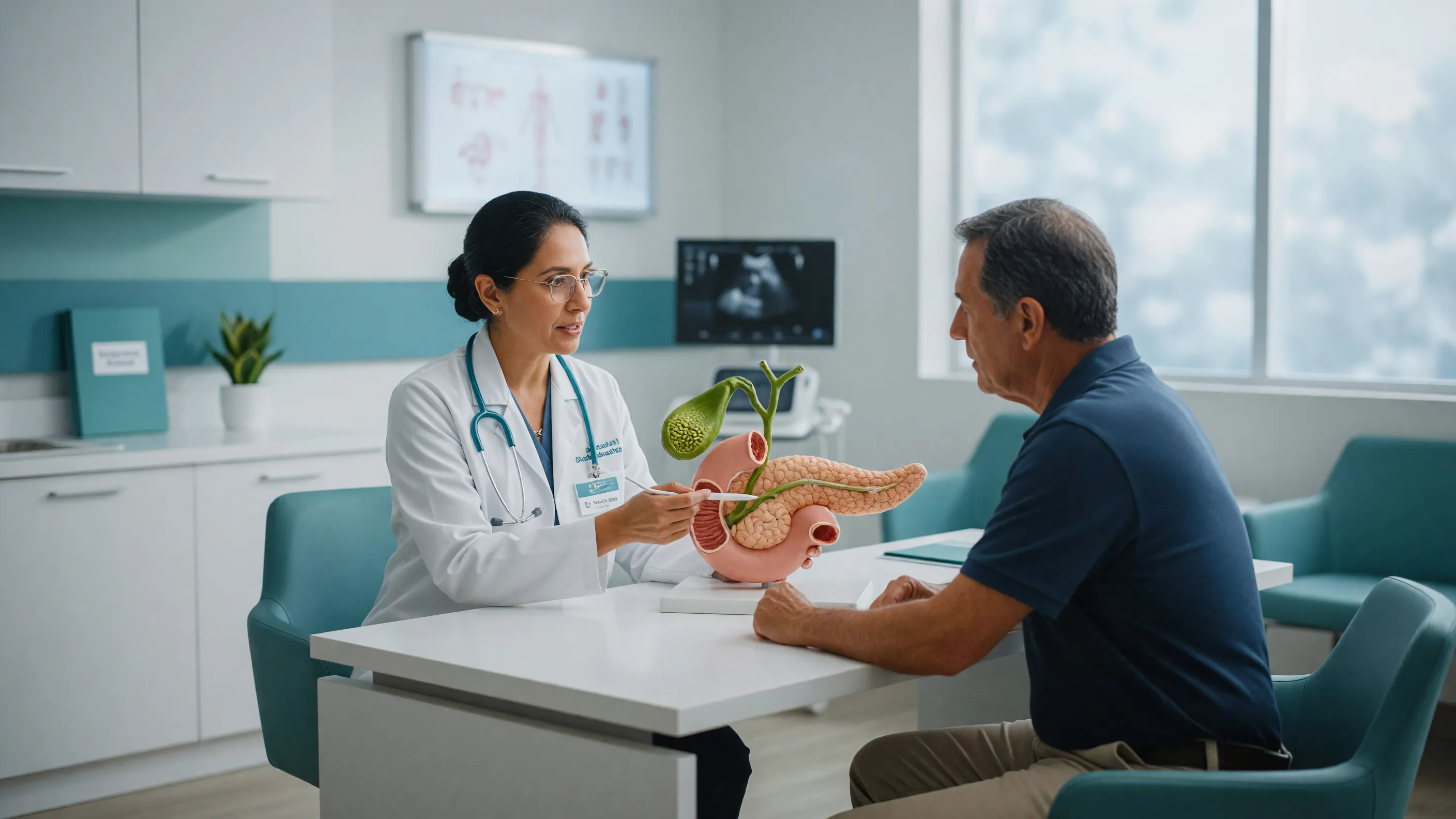
Yes, gallstones can cause pancreatitis. When a gallstone slips out of the gallbladder and blocks the shared opening of the bile and pancreatic ducts, digestive enzymes back up and inflame the pancreas. This condition, called gallstone pancreatitis, is one of the most common causes of acute pancreatitis and needs prompt medical care. In this article, you will learn how gallstones cause pancreatitis, who is most at risk, and which warning signs to watch for. We also explain how doctors diagnose it, the treatment options available, and how to lower your chances of it coming back.
What Is Gallstone Pancreatitis?
Gallstone pancreatitis, also called biliary pancreatitis, is inflammation of the pancreas triggered by a gallstone. It is usually a sudden form of acute pancreatitis that can range from mild to life-threatening.
Key facts to know:
Most mild cases settle with timely hospital care. However, the stones remain a risk until the underlying cause is treated.
- Gallstones form inside the gallbladder
- Stones can travel into the bile duct
- Blockage affects the pancreatic duct
- Inflammation starts suddenly and painfully
- Requires urgent medical evaluation
How Do Gallstones Cause Pancreatitis?
The bile duct and pancreatic duct usually join just before emptying into the small intestine. This shared exit is called the ampulla of Vater.
The process typically unfolds like this:
Small stones are often more likely to slip out and cause this blockage. Even a temporary obstruction can trigger significant inflammation.
- A gallstone leaves the gallbladder
- It lodges in the common bile duct
- The stone blocks the shared ampulla
- Pancreatic enzymes cannot drain normally
- Enzymes activate early and irritate the pancreas
Who Is at Higher Risk?
Anyone with gallstone disease can develop pancreatitis, but certain factors raise the risk. Many people have silent stones for years before a problem appears.
Common risk factors include:
If you already know you have gallstones, discuss your personal risk with a specialist. Early planning can prevent an emergency.
- Being female or older in age
- Obesity or rapid weight loss
- Pregnancy and hormonal changes
- Family history of gallstones
- Diets high in fat and refined carbs
- Diabetes and high blood fats
Have known gallstones? Book a check-up with the specialists at Lux Hospitals today.
Symptoms of Gallstone Pancreatitis
Acute pancreatitis symptoms usually start suddenly. The pain is often severe and may spread to the back.
Warning signs may include:
Severe upper abdominal pain that does not ease needs emergency care. Do not wait for symptoms to settle on their own.
- Intense upper abdominal pain
- Pain radiating to the back
- Nausea and repeated vomiting
- Fever and rapid heartbeat
- Yellowing of skin or eyes
- Tender, swollen abdomen
Possible Complications
Most people recover well with prompt treatment. Severe cases, however, can damage the pancreas and other organs.
Potential complications include:
Repeated attacks over time may also contribute to chronic pancreatitis. This is why treating the root cause matters so much.
- Pancreatic pseudocysts or fluid collections
- Infected or dead pancreatic tissue
- Bile duct infection (cholangitis)
- Breathing and kidney problems
- Diabetes from pancreatic damage
How Is Gallstone Pancreatitis Diagnosed?
Doctors confirm the diagnosis by combining your symptoms, blood tests, and imaging. Identifying a gallstone as the trigger guides the right treatment.
Common tests include:
These results also help your care team judge severity. This decides whether you need monitoring, a procedure, or intensive care.
- Blood amylase and lipase levels
- Liver function tests
- Abdominal ultrasound for gallstones
- CT scan of the pancreas
- MRCP to view bile ducts
- Endoscopic ultrasound when needed
Get an accurate diagnosis with advanced imaging at Lux Hospitals.
Treatment Options at Lux Hospitals
Pancreatitis treatment begins with supportive care to calm the inflammation. The next step is removing the stone causing the blockage.
Treatment may involve:
Your specialist will tailor the plan to the severity of your attack. Most patients improve within days with the right care.
- IV fluids and pain relief
- Rest for the digestive system
- Early nutrition support
- ERCP bile duct stone removal
- Drainage of infected fluid collections
- Endoscopic necrosectomy for dead tissue
Why Gallbladder Removal Matters
Clearing one stone does not stop new stones from forming. Without treatment, gallstone pancreatitis often comes back.
Gallbladder removal surgery offers clear benefits:
Doctors usually recommend laparoscopic cholecystectomy during the same hospital stay for mild cases. The timing depends on how quickly you recover.
- Removes the source of gallstones
- Greatly lowers repeat attack risk
- Minimally invasive keyhole technique
- Small cuts and less pain
- Faster return to daily life
Prevention and Recovery Tips
Healthy habits support recovery and lower the chance of future gallstones. Always follow your doctor's specific advice after discharge.
Helpful steps include:
Small, steady changes protect both your liver and pancreas. Report any return of pain to your doctor promptly.
- Eat smaller, low-fat meals
- Avoid alcohol completely while healing
- Lose weight gradually, not rapidly
- Stay well hydrated daily
- Keep all follow-up appointments
Plan your recovery with expert guidance from Lux Hospitals.
Why Choose Lux Hospitals?
Gallstone pancreatitis needs coordinated care from experienced specialists. Lux Hospitals brings these services together under one roof.
Patients choose us for:
From emergency care to long-term follow-up, our team supports you at every step.
- Experienced gastrointestinal surgeons
- Advanced endoscopy and ERCP facilities
- Minimally invasive surgical expertise
- Round-the-clock emergency support
- Personalised recovery plans
Don't ignore severe abdominal pain—consult the experts at Lux Hospitals today.
Conclusion
So, can gallstones cause pancreatitis? Absolutely. A single stone blocking the shared bile and pancreatic duct can trigger sudden, painful inflammation that needs urgent care. Recognising symptoms like severe upper abdominal pain, vomiting, and fever helps you seek help early and avoid serious complications.
The good news is that gallstone pancreatitis is very treatable. Supportive care, stone removal by ERCP, and timely gallbladder removal can resolve the attack and prevent it from returning. If you have gallstones or worrying symptoms, do not wait. Speak with a specialist at Lux Hospitals for an accurate diagnosis and a treatment plan suited to your needs.