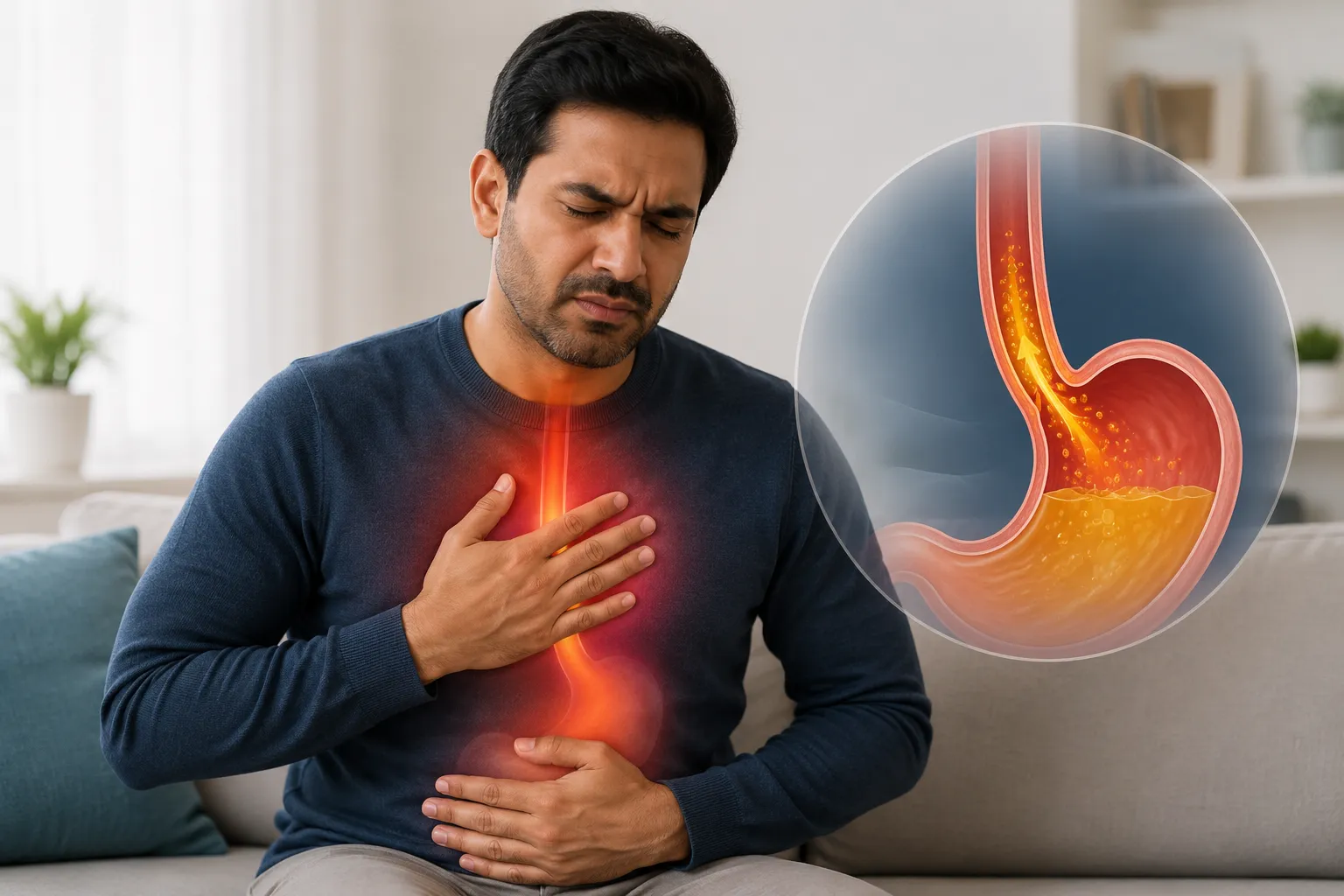
Heartburn keeps returning when stomach acid repeatedly flows back into your esophagus, usually because a weakened valve, hiatal hernia, or lifestyle triggers keep reflux going. Occasional burning is normal, but chronic heartburn happening twice a week or more may signal GERD. This article explains why heartburn recurs, the common triggers, warning signs to watch for, and how doctors diagnose and treat it. You will also learn practical lifestyle changes and when to see a specialist. If your symptoms persist despite antacids, expert evaluation at Lux Hospitals can find the root cause.
What Is Chronic Heartburn?
Chronic heartburn is a burning chest discomfort that keeps coming back, often after meals or when lying down. It happens when stomach acid flows back into the esophagus.
When this occurs twice a week or more, it may point to gastroesophageal reflux disease:
- Burning behind the breastbone
- Sour or bitter taste in mouth
- Symptoms worse after eating
- Discomfort when lying flat
- Frequent regurgitation of food
If heartburn returns week after week, get evaluated at Lux Hospitals.
1. A Weakened Esophageal Valve
A ring of muscle called the lower esophageal sphincter normally seals off the stomach. When it weakens or relaxes at the wrong time, acid escapes upward.
This is a leading reason heartburn keeps returning. Several factors weaken this valve:
- Frequent overeating and large meals
- Smoking and alcohol use
- Certain medications relaxing the muscle
- Aging and muscle weakening
- Persistent acid reflux over years
2. Hiatal Hernia
A hiatal hernia occurs when part of the stomach pushes up through the diaphragm into the chest. This disrupts the natural anti-reflux barrier.
Even a small hernia can cause stubborn, recurring symptoms. You may notice:
- Heartburn that resists antacids
- Chest pressure after meals
- Frequent belching or regurgitation
- Difficulty swallowing at times
- Worse symptoms when bending over
3. Diet and Lifestyle Triggers
Daily habits often drive reflux back again and again. Certain foods and behaviors relax the valve or increase acid.
Identifying your personal triggers is key to lasting relief. Common culprits include:
- Spicy, fatty, or fried foods
- Coffee, chocolate, and citrus
- Carbonated and alcoholic drinks
- Eating late at night
- Lying down soon after meals
Struggling to pinpoint your triggers? Book a consultation with Lux Hospitals' GI team.
4. Obesity and Abdominal Pressure
Excess weight around the abdomen pushes on the stomach, forcing acid upward. This is why heartburn is common in people carrying extra weight.
Managing weight can dramatically reduce reflux. Pressure-raising factors include:
- Central abdominal fat
- Pregnancy and hormonal changes
- Tight belts or waistbands
- Constipation and straining
- Large meals stretching the stomach
Other Causes of Recurring Heartburn
Sometimes persistent heartburn signals a deeper digestive problem needing specialist care.
Several conditions can mimic or worsen reflux symptoms:
Warning Signs You Should Not Ignore
Most heartburn is harmless, but certain symptoms need urgent medical attention. They may signal complications or another serious condition.
See a doctor promptly if you experience:
- Difficulty or pain when swallowing
- Unintended weight loss
- Vomiting blood or black stools
- Persistent chest pain
- Ongoing hoarseness or cough
These red-flag symptoms need prompt evaluation—contact Lux Hospitals without delay.
Complications of Untreated Chronic Heartburn
Ignoring recurring reflux allows acid to keep damaging the esophageal lining. Over time this can lead to serious problems.
Possible complications include:
- Esophageal inflammation (esophagitis)
- Narrowing or strictures
- Barrett's esophagus
- Increased cancer risk long-term
- Chronic cough and throat irritation
How Chronic Heartburn Is Diagnosed
Doctors start with your symptom history and may recommend tests to confirm the cause. Accurate diagnosis guides effective treatment.
Common evaluations include:
- Upper endoscopy to inspect the esophagus
- 24-hour acid (pH) monitoring
- Esophageal manometry testing
- Barium swallow X-ray
- Assessment for hiatal hernia
Get an accurate diagnosis with advanced endoscopy at Lux Hospitals.
Treatment Options at Lux Hospitals
Treatment ranges from lifestyle changes and medication to surgery for stubborn cases. Care is tailored to your severity and cause.
Options our specialists offer include:
- Acid-reducing medications and lifestyle plans
- Laparoscopic fundoplication for GERD
- Open fundoplication when needed
- Hiatal hernia repair surgery
- Weight-loss surgery for reflux relief
Prevention and Lifestyle Tips
Simple daily habits can prevent heartburn from returning and reduce reliance on medication.
Start with these practical steps:
- Eat smaller, more frequent meals
- Avoid lying down after eating
- Raise the head of your bed
- Limit alcohol and quit smoking
- Maintain a healthy body weight
Why Choose Lux Hospitals?
Lux Hospitals brings together experienced gastroenterologists and surgeons for complete reflux care. From diagnosis to advanced surgery, everything is under one roof.
Patients choose us for:
- Expert GI and surgical specialists
- Advanced endoscopy and diagnostics
- Minimally invasive surgical options
- Personalized treatment plans
- Compassionate, long-term follow-up care
Take control of chronic heartburn—schedule your appointment at Lux Hospitals today.
Conclusion
Chronic heartburn that keeps returning is rarely just bad luck—it usually reflects a weakened valve, hiatal hernia, lifestyle triggers, or excess weight. Occasional burning may respond to simple changes, but persistent symptoms deserve proper evaluation.
Don't rely on antacids indefinitely, especially if you notice warning signs like trouble swallowing or weight loss. Early diagnosis prevents complications such as esophagitis or Barrett's esophagus. With the right combination of lifestyle changes, medication, and, when needed, surgery, most people find lasting relief. The specialists at Lux Hospitals can identify the root cause of your reflux and design a treatment plan tailored to you, so heartburn stops controlling your daily life.