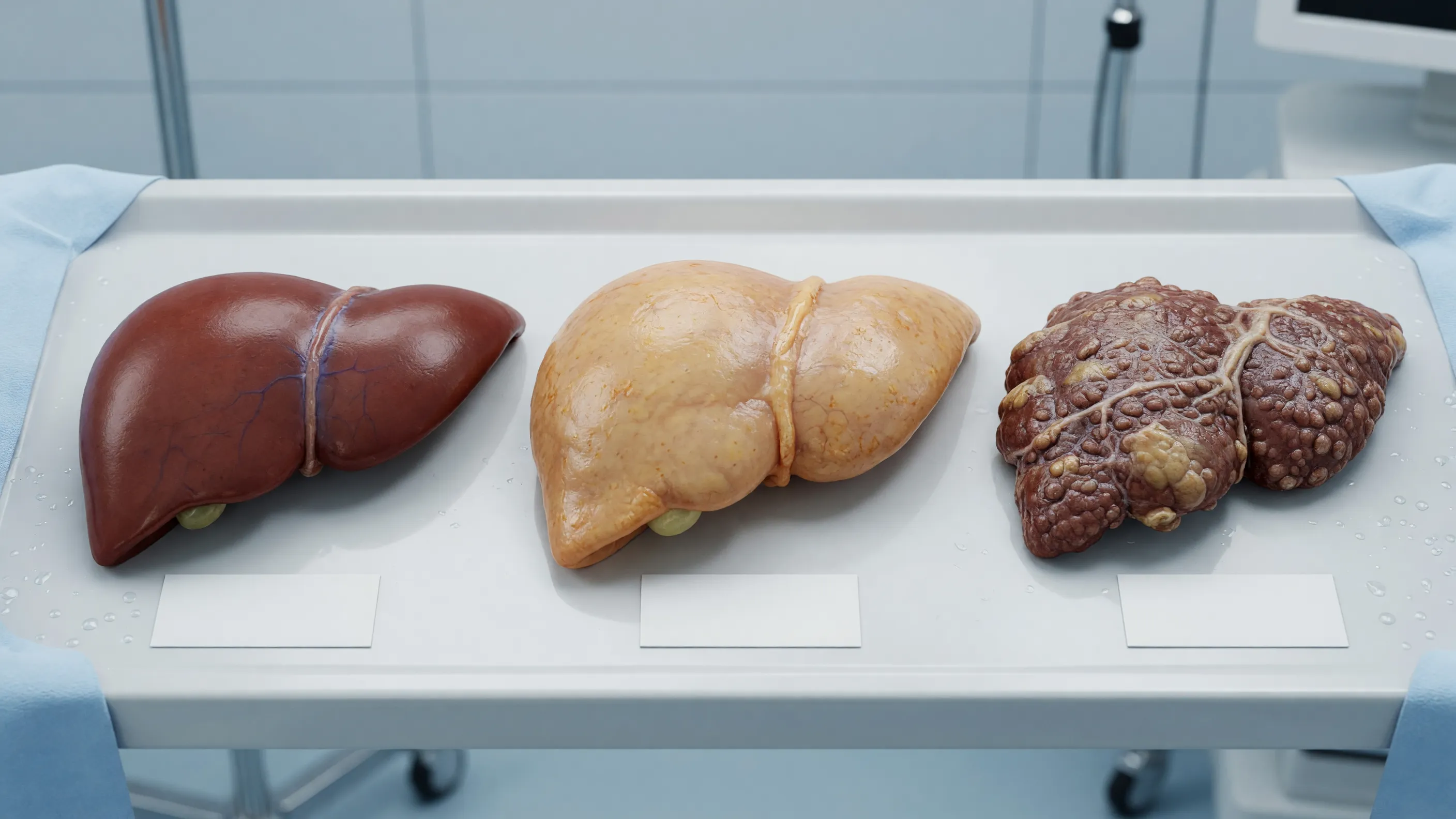
Fatty liver is an early, often reversible buildup of fat in liver cells, while cirrhosis is advanced, permanent scarring that can lead to liver failure. In short, fatty liver is a warning sign and cirrhosis is the serious endpoint. Understanding the difference helps you act before damage becomes irreversible. This article explains what each condition is, how their causes and symptoms differ, and how doctors diagnose and treat them. You will also learn prevention tips and when to seek specialist care at Lux Hospitals for the best possible liver health outcomes.
What Is Fatty Liver Disease?
Fatty liver disease occurs when excess fat builds up inside liver cells. It is common and often causes no symptoms in early stages.
There are two main types, and both are frequently reversible with lifestyle changes:
- Non-alcoholic fatty liver (NAFLD)
- Alcohol-related fatty liver
- Often linked to obesity
- Associated with type 2 diabetes
- Usually silent in early stages
Worried about your liver? Book a liver health check at Lux Hospitals today.
What Is Liver Cirrhosis?
Cirrhosis is advanced, permanent scarring of the liver caused by long-term damage. Healthy tissue is replaced by stiff scar tissue that blocks normal function.
Unlike fatty liver, cirrhosis is largely irreversible and can lead to liver failure. Key features include:
- Widespread liver scarring (fibrosis)
- Reduced liver function
- Often develops over many years
- Can cause fluid buildup and bleeding
- Increased risk of liver cancer
Fatty Liver vs Cirrhosis: Key Differences
The core difference in fatty liver vs cirrhosis is severity and reversibility. Fatty liver is an early stage; cirrhosis is the damaging endpoint.
Here is how they compare at a glance:
- Fatty liver — fat buildup, often reversible
- Cirrhosis — permanent scarring, irreversible
- Fatty liver — usually no symptoms
- Cirrhosis — jaundice, swelling, fatigue
- Fatty liver — treated with lifestyle changes
- Cirrhosis — needs medical or surgical care
Understand your liver stage—consult the specialists at Lux Hospitals.
What Causes Each Condition?
Both conditions share overlapping causes, but cirrhosis usually results from years of untreated damage. Fatty liver is often the first warning sign.
Common causes include:
- Excess alcohol consumption
- Obesity and poor diet
- Type 2 diabetes and insulin resistance
- Chronic hepatitis B or C
- High cholesterol or triglycerides
- Certain long-term medications
Symptoms to Watch For
Fatty liver rarely causes noticeable symptoms, which makes it easy to miss. Cirrhosis produces clearer, more serious warning signs.
You may notice with advancing disease:
- Fatigue and weakness
- Yellowing of skin or eyes
- Swelling in legs or abdomen
- Easy bruising or bleeding
- Loss of appetite and weight
- Confusion or poor concentration
Notice any of these signs? Don't wait—get evaluated at Lux Hospitals.
How Fatty Liver Progresses to Cirrhosis
Untreated fatty liver can slowly worsen through several stages. Ongoing inflammation triggers scarring that eventually becomes cirrhosis.
The typical progression follows these stages:
- Simple fatty liver (fat buildup)
- Steatohepatitis (fat plus inflammation)
- Fibrosis (early scarring)
- Cirrhosis (extensive permanent scarring)
Possible Complications
Fatty liver rarely causes complications on its own, but cirrhosis can be life-threatening. Advanced scarring disrupts many body functions.
Serious complications may include:
- Liver failure
- Internal bleeding from varices
- Fluid buildup in the abdomen
- Liver cancer risk
- Hepatic encephalopathy (brain effects)
- An enlarged spleen
How Doctors Diagnose Liver Disease
Doctors use a combination of tests to distinguish fatty liver from cirrhosis. Early diagnosis improves outcomes significantly.
Common diagnostic tools include:
- Liver function tests (blood work)
- Ultrasound or FibroScan imaging
- CT or MRI scans
- Liver biopsy when needed
- Screening for hepatitis viruses
Get an accurate liver diagnosis with advanced imaging at Lux Hospitals.
Treatment Options at Lux Hospitals
Treatment depends on the stage and cause of your liver disease. Early fatty liver often reverses with lifestyle changes, while cirrhosis needs ongoing management.
Our specialists tailor care that may include:
- Diet and weight-loss programs
- Bariatric procedure for obesity-related cases
- Managing diabetes and cholesterol
- Treating underlying infections
- Monitoring for complications
- Surgical care for related conditions
Prevention and Lifestyle Tips
Most liver damage is preventable with healthy habits. Protecting your liver early can stop fatty liver from advancing.
Simple steps make a big difference:
- Maintain a healthy weight
- Limit or avoid alcohol
- Eat a balanced, low-sugar diet
- Exercise regularly
- Control diabetes and blood pressure
- Get vaccinated against hepatitis
Take charge of your liver health—schedule a consultation at Lux Hospitals.
Why Choose Lux Hospitals?
Lux Hospitals offers experienced specialists and advanced technology for complete liver and digestive care. We focus on early detection and personalized treatment.
Patients choose us for:
- Skilled gastroenterology and surgery teams
- Advanced diagnostic imaging
- Minimally invasive treatment options
- Comprehensive care for liver cysts
- Support for related digestive conditions
- Patient-centered follow-up care
Conclusion
Understanding fatty liver vs cirrhosis empowers you to act early. Fatty liver is a reversible warning sign, while cirrhosis is permanent scarring that can threaten your life. The good news is that most liver damage can be slowed or prevented through healthy lifestyle choices and timely medical care.
If you have risk factors like obesity, diabetes, or heavy alcohol use, don't wait for symptoms to appear. Regular screening catches problems while they are still treatable. The experienced specialists at Lux Hospitals provide accurate diagnosis, personalized treatment, and ongoing support to protect your liver at every stage. Take the first step toward better liver health today.