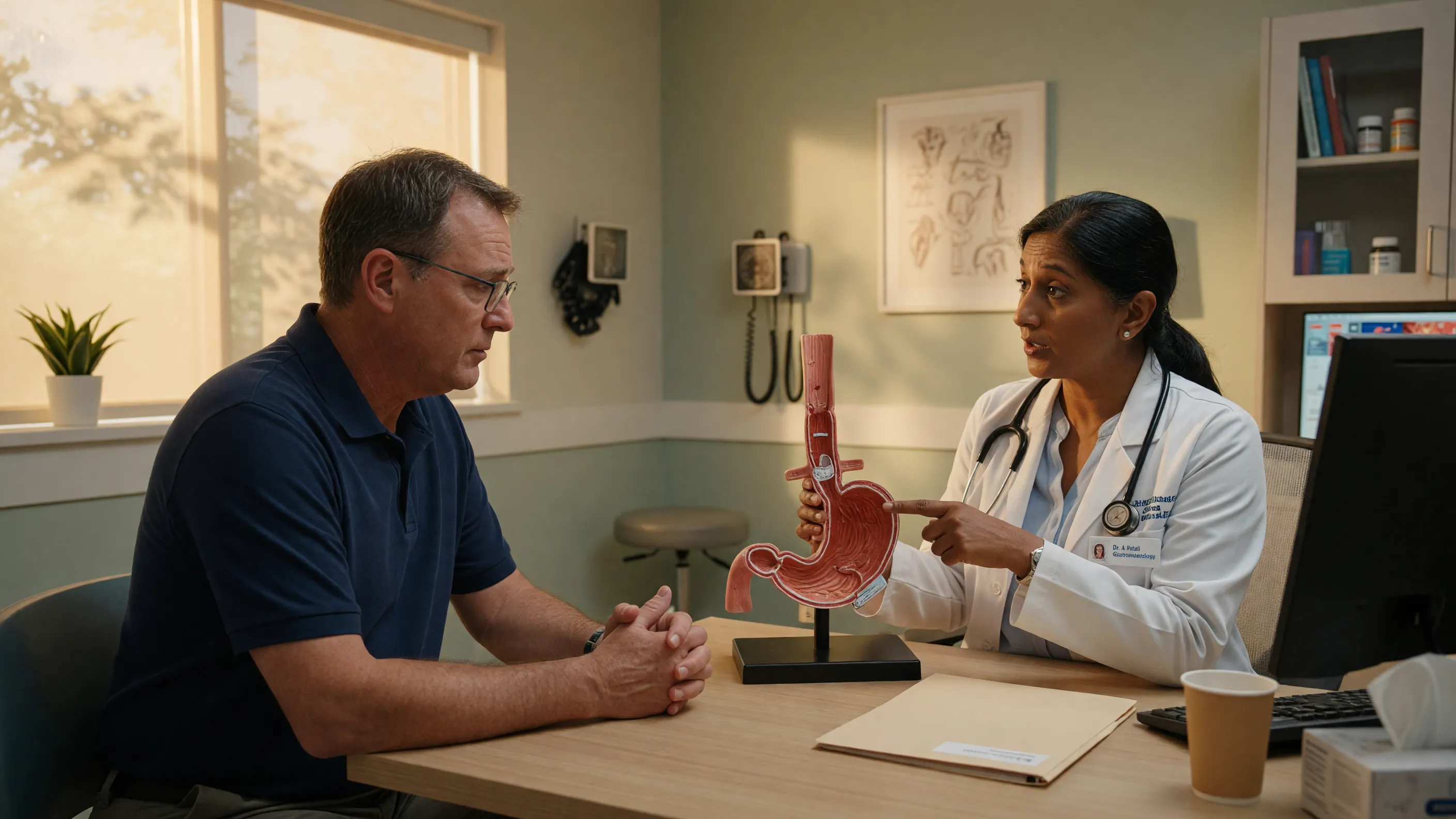
Difficulty swallowing food can be a sign of achalasia, a rare disorder where the esophagus fails to move food into the stomach because the lower valve won't relax. It is one of several possible causes of dysphagia, but it deserves prompt evaluation. This article explains what achalasia is, its symptoms, other causes of trouble swallowing food, complications, and how doctors diagnose and treat it. You will also learn the warning signs that mean you should see a specialist. Read on to understand your swallowing difficulty and the effective treatment options available at Lux Hospitals.
What Is Achalasia?
Achalasia is a rare disorder of the esophagus, the tube that carries food from your mouth to your stomach. The muscle valve at the bottom fails to relax properly.
As a result, food and liquid struggle to pass into the stomach and instead collect in the esophagus. This causes progressive difficulty swallowing food.
Key facts about achalasia include:
- It affects the esophageal muscles and nerves
- The lower esophageal valve stays tight
- Symptoms worsen slowly over time
- It can affect any age group
- It is treatable but not self-resolving
Struggling to swallow? Get an expert esophageal evaluation at Lux Hospitals today.
How Normal Swallowing Works
Swallowing is a coordinated process involving muscles and nerves. Food travels down the esophagus through rhythmic waves called peristalsis.
At the bottom, a valve called the lower esophageal sphincter relaxes to let food enter the stomach, then closes to prevent reflux.
In achalasia, two things go wrong:
- Peristalsis waves weaken or stop
- The lower valve fails to relax
- Food backs up in the esophagus
- Pressure builds behind the blockage
Symptoms of Achalasia
Symptoms usually develop gradually and are easy to dismiss at first. Many people adjust their eating habits without realizing something is wrong.
Over time, swallowing both solids and liquids becomes harder. You may notice:
- Food or liquid sticking in the chest
- Regurgitation of undigested food
- Chest pain or discomfort
- Heartburn not helped by medication
- Unintended weight loss
- Coughing at night, especially lying down
Don't ignore persistent swallowing problems—consult the specialists at Lux Hospitals.
Other Causes of Difficulty Swallowing Food
Achalasia is not the only reason for trouble swallowing food. Several conditions can create similar symptoms.
A proper diagnosis is essential to rule out these causes:
- GERD and acid reflux damage
- Hiatal hernia pushing the stomach up
- Esophageal narrowing or strictures
- Stomach cancer near the junction
- Peptic ulcer disease
- Nerve or muscle disorders
Warning Signs You Shouldn't Ignore
Some symptoms suggest a more serious problem and need urgent medical attention. Rapid or painful swallowing changes should never be dismissed.
Seek prompt evaluation if you experience:
- Sudden inability to swallow
- Choking during meals
- Significant unexplained weight loss
- Vomiting blood or black stools
- Persistent chest pain
- Frequent chest infections
Notice these red flags? Book an urgent consultation at Lux Hospitals now.
Possible Complications of Untreated Achalasia
Left untreated, achalasia can lead to serious problems as the esophagus stretches and weakens. Complications develop slowly but affect quality of life.
Risks of delaying treatment include:
- Severe weight loss and malnutrition
- Aspiration of food into lungs
- Recurrent pneumonia
- Esophageal widening (megaesophagus
- Increased esophageal cancer risk
- Chronic chest discomfort
How Achalasia Is Diagnosed
Diagnosing achalasia involves specialized tests to examine how your esophagus functions. Doctors confirm the diagnosis and rule out other conditions.
Common diagnostic tests include:
- Esophageal manometry to measure pressure
- Barium swallow X-ray study
- Upper endoscopy to view the lining
- Assessment to exclude cancer or strictures
Accurate diagnosis matters—schedule your swallowing assessment at Lux Hospitals.
Treatment Options at Lux Hospitals
Achalasia has no cure, but effective treatments relax the tight valve and restore comfortable swallowing. The right choice depends on your age and severity.
Our specialists offer proven options for achalasia cardia:
- Laparoscopic Heller myotomy — minimally invasive muscle cut
- Heller myotomy — surgical valve release
- Pneumatic balloon dilation
- Medications for mild cases
- Fundoplication to prevent reflux afterward
Lifestyle and Eating Tips
Simple habits can ease swallowing between treatments and reduce discomfort. These do not replace medical care but support daily eating.
Helpful strategies include:
- Eat small, frequent meals
- Chew food thoroughly and slowly
- Drink water with each bite
- Avoid eating close to bedtime
- Sleep with your head elevated
- Choose softer, moist foods
Need personalized guidance? The nutrition team at Lux Hospitals can help.
Why Choose Lux Hospitals?
Lux Hospitals combines advanced diagnostics with experienced surgical expertise for esophageal and digestive disorders. Patients receive personalized, compassionate care.
What sets our team apart:
- Skilled gastrointestinal surgeons
- Minimally invasive treatment options
- Comprehensive swallowing evaluations
- Multidisciplinary follow-up care
- Focus on long-term quality of life
Conclusion
Difficulty swallowing food should never be ignored, especially when it worsens over time. While achalasia is a common culprit, similar symptoms can arise from reflux, hernias, or more serious conditions. Early evaluation makes a real difference in outcomes and comfort.
Modern treatments—from balloon dilation to laparoscopic Heller myotomy—can restore normal swallowing and protect your esophagus from long-term damage. If food frequently sticks, you regurgitate meals, or you're losing weight, seek expert care. The experienced team at Lux Hospitals offers accurate diagnosis and effective, minimally invasive treatment tailored to your needs. Don't let swallowing problems limit your life—reach out for a specialist consultation and take the first step toward relief.