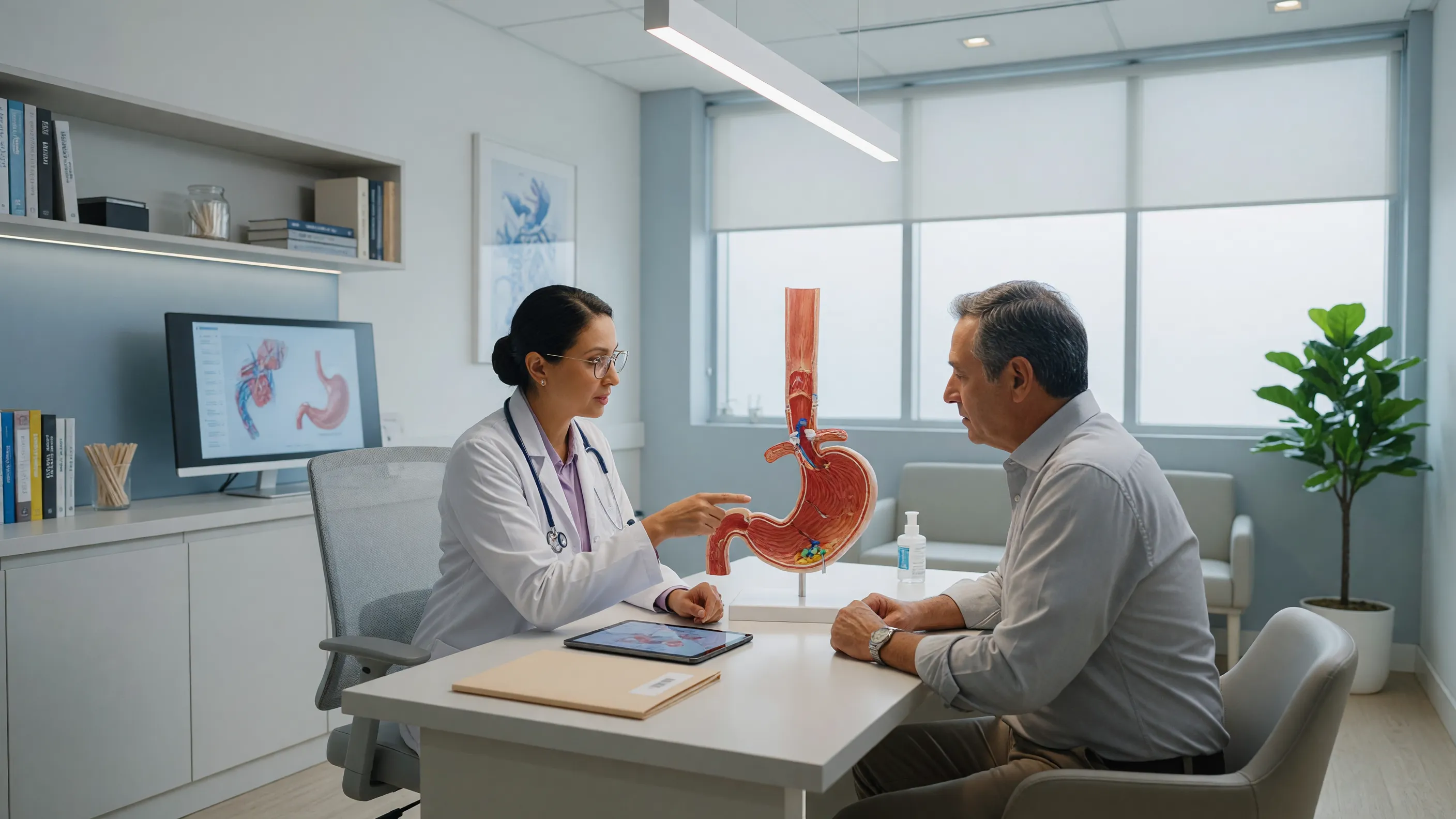
Yes, achalasia can often be managed without major surgery. Non-surgical achalasia treatment options include pneumatic balloon dilation, Botox injections, and medications that relax the lower esophageal sphincter. These help many patients swallow more comfortably, though results vary. This article explains what achalasia is, which non-surgical treatments work best, when surgery becomes necessary, and how specialists choose the right approach. We also cover diagnosis, complications, lifestyle tips, and the advanced care available at Lux Hospitals so you can make an informed decision about your swallowing difficulty.
What Is Achalasia?
Achalasia is a rare disorder where the esophagus struggles to move food into the stomach. The lower esophageal sphincter fails to relax properly.
This causes food and liquid to collect above the stuck muscle. Over time, swallowing becomes increasingly difficult.
Common symptoms include:
- Difficulty swallowing solids and liquids
- Regurgitation of undigested food
- Chest pain or discomfort
- Unintended weight loss
- Heartburn not relieved by antacids
Struggling to swallow? Get evaluated by the specialists at Lux Hospitals today.
Can Achalasia Be Treated Without Surgery?
Yes, many patients improve with non-surgical treatments that relax or stretch the tight sphincter. These approaches restore easier swallowing without a major operation.
The best choice depends on your age, health, and disease severity. Some options last longer than others.
Non-surgical achalasia treatment options include:
- Muscle-relaxing medications
- Botox injections into the sphincter
- Pneumatic balloon dilation
- POEM, a minimally invasive endoscopy
- Ongoing dietary adjustments
1. Medications for Achalasia
Medications can temporarily relax the lower esophageal sphincter, easing swallowing. They are usually taken before meals.
They suit patients who cannot undergo other procedures. However, effects are mild and short-lived.
Commonly used medications include:
- Calcium channel blockers
- Nitrates for muscle relaxation
- Sildenafil in select cases
- Short-term symptom relief only
Ask a Lux Hospitals gastroenterologist which achalasia treatment options fit you best.
2. Botox Injections
Botulinum toxin is injected into the sphincter during endoscopy to relax the muscle. It helps food pass more freely.
This option works well for older or high-risk patients. Effects typically fade within months, needing repeat treatment.
Key points about Botox include:
- Quick outpatient endoscopic procedure
- Good for frail or elderly patients
- Relief lasts several months
- May require repeat injections
- Low risk of complications
3. Pneumatic Balloon Dilation
Pneumatic dilation uses a balloon to stretch and partially tear the tight sphincter muscle. It is one of the most effective non-surgical options.
Many patients enjoy long-lasting relief, though some need repeat sessions. It is performed endoscopically.
Benefits and considerations include:
- Effective for long-term symptom relief
- No incisions required
- Outpatient or short-stay procedure
- Small risk of esophageal tear
- May need repeat dilation
Explore balloon dilation and other achalasia treatment options at Lux Hospitals.
4. POEM: Minimally Invasive Option
Per-oral endoscopic myotomy (POEM) cuts the tight muscle from inside the esophagus using an endoscope. No external incisions are needed.
It offers excellent, durable results with a shorter recovery than open surgery. Skilled endoscopists perform it.
Why POEM appeals to patients:
- Scar-free, incision-less technique
- High long-term success rates
- Faster recovery than surgery
- Suits many achalasia types
- May cause reflux afterward
When Surgery Becomes Necessary
When non-surgical methods fail or symptoms return, surgery offers lasting relief. The most common operation is a Heller myotomy.
During this, the tight muscle is cut to ease food passage. It is often done laparoscopically.
Surgery may be recommended when:
- Dilation or Botox stops working
- Symptoms are severe or worsening
- Younger patients seeking durable results
- Repeated regurgitation and weight loss
- A permanent solution is preferred
Discuss surgical and non-surgical achalasia care with the Lux Hospitals team.
How Achalasia Is Diagnosed
Accurate diagnosis guides the right achalasia treatment options. Doctors combine several tests to confirm the condition.
These tests measure how the esophagus and sphincter function. They also rule out other causes of swallowing trouble.
Common diagnostic tests include:
- Esophageal manometry (pressure test)
- Barium swallow X-ray
- Upper endoscopy examination
- Timed esophageal emptying study
- Tests to exclude GERD acid reflux
Lifestyle and Diet Tips
Everyday habits can ease swallowing and reduce discomfort alongside medical treatment. They do not cure achalasia but improve comfort.
Small, mindful changes make meals easier. Always chew slowly and stay upright.
Helpful lifestyle adjustments include:
- Eat small, frequent meals
- Chew food thoroughly
- Drink water with meals
- Avoid eating before bedtime
- Sleep with head slightly elevated
Combine expert treatment with lifestyle guidance from Lux Hospitals specialists.
Treatment Options at Lux Hospitals
Lux Hospitals offers a full range of care for achalasia cardia, from non-surgical procedures to advanced surgery. Treatment is tailored to each patient.
Our specialists use the latest endoscopic and minimally invasive techniques. This ensures safe, effective outcomes.
Available treatments include:
- Botox injections and dilation
- POEM endoscopic myotomy
- Laparoscopic Heller myotomy
- Anti-reflux fundoplication when needed
- Comprehensive follow-up care
Why Choose Lux Hospitals?
Choosing the right team matters for a complex condition like achalasia. Lux Hospitals combines expertise with advanced technology.
We focus on personalized, patient-centered care at every step. Recovery support continues after treatment.
Reasons patients trust us:
- Experienced gastro and surgical specialists
- Modern endoscopy and imaging facilities
- Minimally invasive treatment focus
- Personalized care plans
- Dedicated post-treatment follow-up
Book a consultation with Lux Hospitals to explore your achalasia treatment options.
Conclusion
Achalasia can often be treated without major surgery, especially in its early stages. Non-surgical achalasia treatment options like medications, Botox injections, pneumatic balloon dilation, and POEM help many patients swallow comfortably again. The right choice depends on your age, overall health, and how severe your symptoms are.
When these methods stop working, surgery such as a Heller myotomy offers a lasting solution. A proper diagnosis is the first step toward relief. If you have ongoing difficulty swallowing, don't wait—early evaluation leads to better outcomes. The experienced specialists at Lux Hospitals can guide you toward the safest, most effective treatment for your needs.