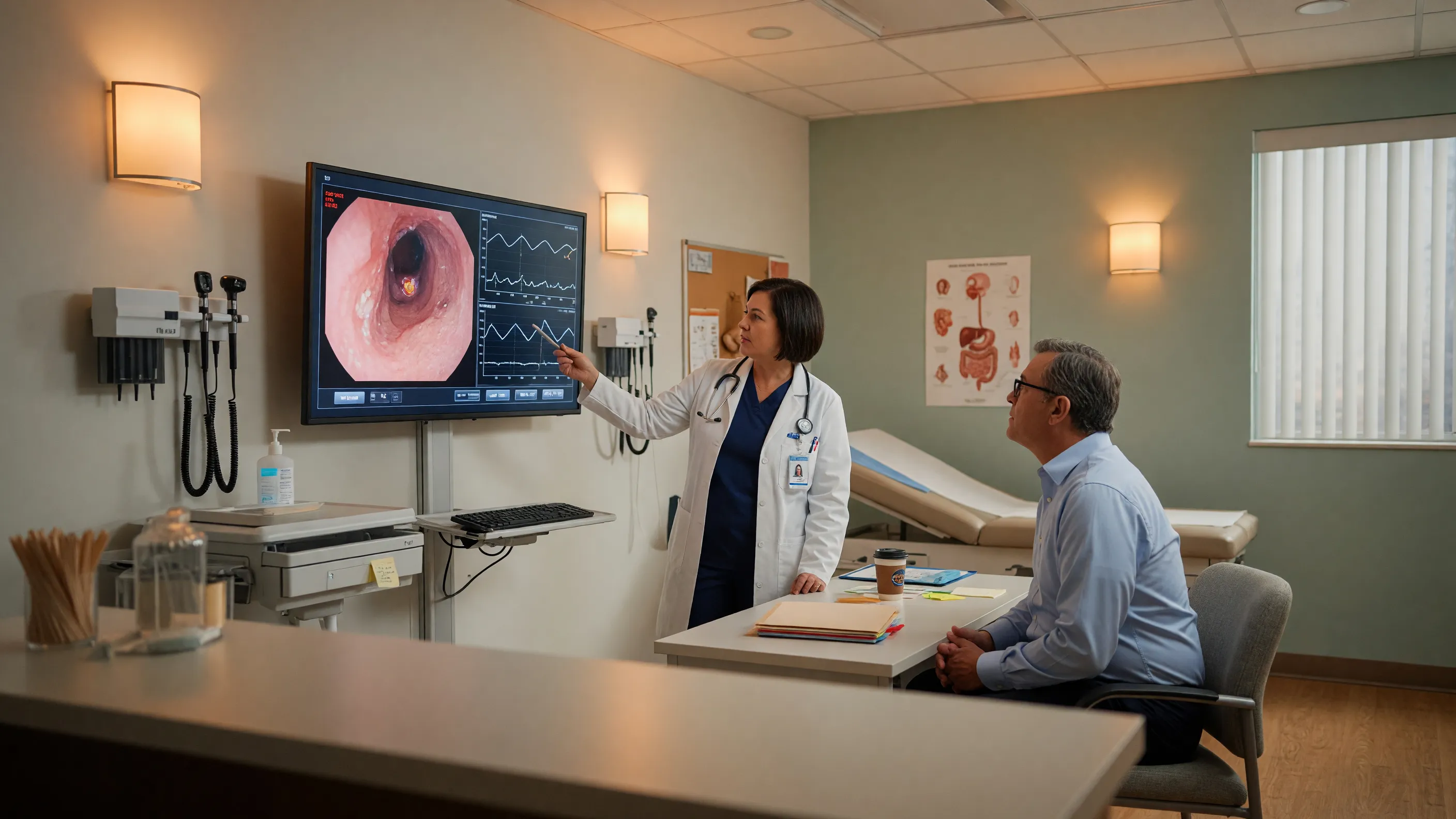
Achalasia is diagnosed mainly through esophageal manometry, a barium swallow X-ray, and upper endoscopy, which together confirm a tight lower esophageal sphincter and absent muscle contractions. These tests explain why swallowing feels stuck. This article walks you through each step of achalasia diagnosis, the symptoms doctors look for, and how specialists rule out other conditions. You will also learn what to expect during testing and when to seek expert care. Early, accurate diagnosis helps guide effective treatment and prevents complications.
What Is Achalasia?
Achalasia is a rare swallowing disorder that affects the esophagus, the tube carrying food to your stomach. The muscle valve at the bottom, the lower esophageal sphincter, fails to relax properly.
As a result, food and liquid struggle to pass into the stomach. Understanding the condition helps explain why specific tests are needed.
Key features include:
- Tight lower esophageal sphincter
- Weak or absent esophageal contractions
- Progressive difficulty swallowing
- Food backing up into the throat
Learn more about achalasia cardia care at Lux Hospitals.
Symptoms That Prompt Testing
Doctors usually suspect achalasia when swallowing problems worsen over months or years. Symptoms often overlap with acid reflux, which can delay diagnosis.
You may notice:
- Difficulty swallowing solids and liquids
- Regurgitation of undigested food
- Chest pain or discomfort
- Unintended weight loss
- Nighttime coughing or choking
Struggling to swallow? Book an evaluation with the specialists at Lux Hospitals.
The First Doctor Visit
Diagnosis begins with a detailed conversation about your symptoms and medical history. The doctor asks how long swallowing has been difficult and whether it involves solids, liquids, or both.
A physical exam helps rule out obvious causes. This first step guides which tests come next.
Expect questions about:
- Onset and pattern of symptoms
- Weight changes over time
- Reflux or heartburn history
- Family and medication history
1. Barium Swallow X-ray
A barium swallow is often the first imaging test ordered. You drink a chalky liquid that coats the esophagus and shows up on X-ray.
The images reveal how food moves and where it gets stuck. Achalasia often produces a classic "bird's beak" narrowing.
This test can show:
- Narrowed lower esophageal opening
- Widened esophagus above the valve
- Delayed emptying of liquid
- Absent normal muscle waves
Get accurate imaging and expert reading at Lux Hospitals.
2. Esophageal Manometry
Esophageal manometry is the gold-standard test for confirming achalasia. A thin, flexible tube passes through the nose into the esophagus to measure muscle pressure.
You swallow small sips of water while sensors record contractions. It confirms whether the sphincter relaxes normally.
Manometry detects:
- Failure of the sphincter to relax
- Absent or abnormal contractions
- High resting valve pressure
- The specific achalasia subtype
Ask about advanced esophageal manometry testing at Lux Hospitals.
3. Upper Endoscopy
An upper endoscopy uses a thin camera to view the esophagus and stomach lining directly. It helps exclude tumors, inflammation, or narrowing that mimic achalasia.
Doctors may take small tissue samples if anything looks unusual. Endoscopy is especially useful for ruling out stomach cancer.
Endoscopy checks for:
- Blockages or growths
- Retained food in the esophagus
- Signs of inflammation
- Structural narrowing
Other Supporting Tests
Sometimes additional tests refine the diagnosis or assess complications. These are chosen based on your symptoms and earlier findings.
Supporting tools may include:
- Timed barium esophagram for emptying
- High-resolution manometry mapping
- CT scan for unclear cases
- pH monitoring to rule out reflux
Trust a full diagnostic workup at Lux Hospitals for lasting relief.
Ruling Out Similar Conditions
Achalasia shares symptoms with several digestive disorders. Careful testing helps distinguish it from conditions that need different treatment.
Doctors often rule out:
- GERD acid reflux and heartburn
- Esophageal strictures or spasm
- Hiatal hernia affecting swallowing
- Peptic ulcer disease
- Cancer of the esophagus
Treatment Options at Lux Hospitals
Once achalasia is confirmed, treatment aims to relax the tight sphincter and ease swallowing. The right choice depends on age, health, and disease severity.
Common options include:
- Heller myotomy for lasting relief
- Laparoscopic Heller myotomy, minimally invasive
- Pneumatic balloon dilation
- Medications for mild cases
- Botox injections when surgery is risky
Explore laparoscopic Heller myotomy options with our experts at Lux Hospitals.
Why Choose Lux Hospitals?
Lux Hospitals combines experienced gastro specialists with advanced diagnostic technology. Accurate testing means faster, more targeted treatment.
Our team supports you from diagnosis through recovery. We personalize every care plan.
Patients choose us for:
- Skilled gastroenterology and surgical teams
- Modern manometry and endoscopy suites
- Minimally invasive surgical expertise
- Compassionate, patient-focused care
Book your consultation at Lux Hospitals for expert achalasia care today.
Conclusion
Achalasia diagnosis relies on combining esophageal manometry, a barium swallow, and upper endoscopy to confirm the condition and rule out lookalikes. Because symptoms build slowly and mimic acid reflux, early testing is key to preventing weight loss and complications.
If swallowing feels difficult or food comes back up, don't wait. A timely, accurate diagnosis opens the door to effective treatments like Heller myotomy or balloon dilation. The experienced specialists at Lux Hospitals use advanced tools to identify achalasia precisely and design a treatment plan suited to you. Reach out today to protect your swallowing and overall digestive health.