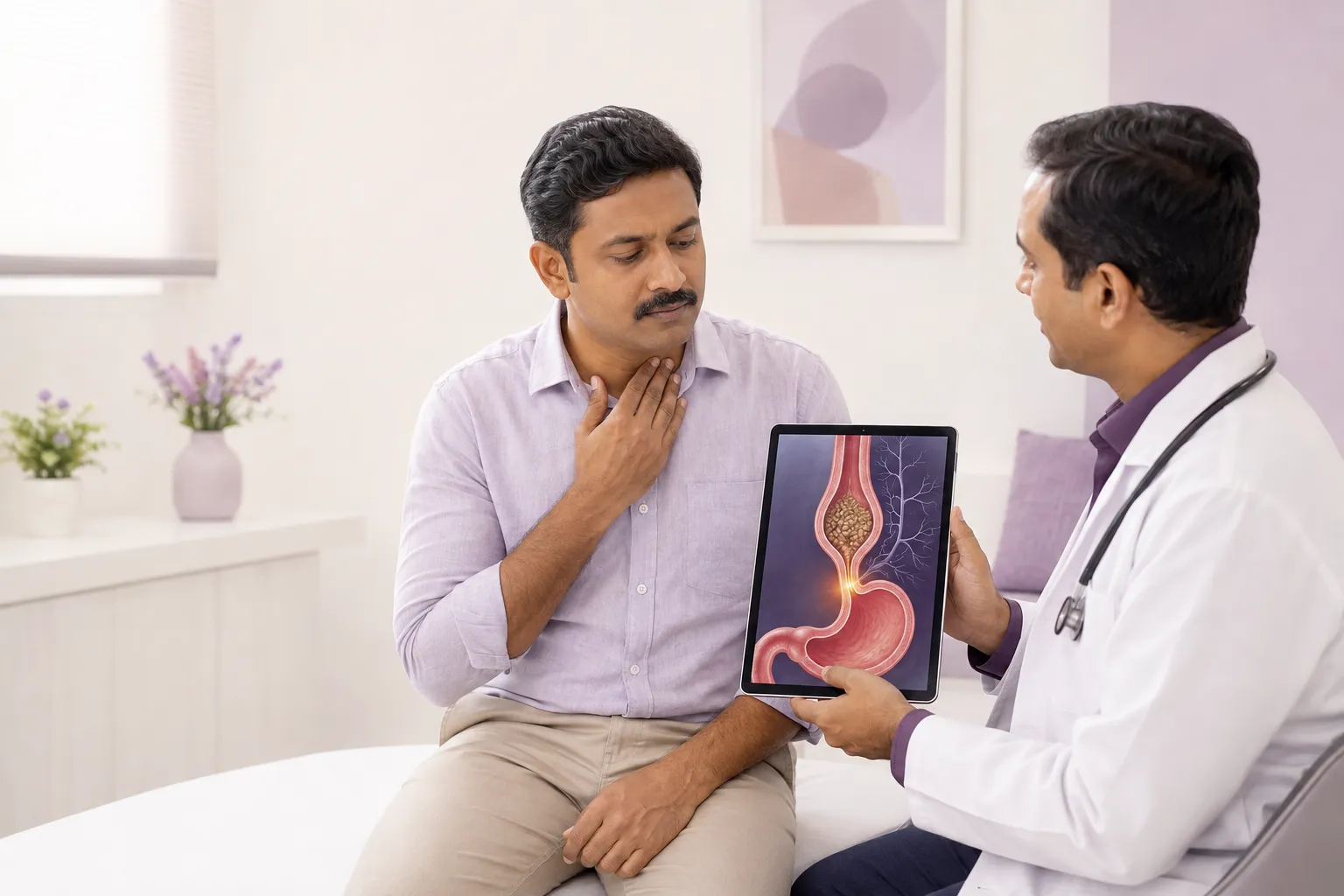
Achalasia cardia is caused mainly by the progressive loss of nerve cells in the esophagus, which prevents the lower esophageal sphincter from relaxing and stops food from passing into the stomach. The exact trigger is often unknown, but autoimmune reactions, viral infections, and genetic factors are believed to play a role. This article explains what achalasia cardia is, its main causes, risk factors, symptoms, how it is diagnosed, and the treatment options available at Lux Hospitals to help you swallow comfortably again.
What Is Achalasia Cardia?
Achalasia cardia is a rare disorder of the esophagus, the tube that carries food to the stomach. It affects how food moves and how the valve at the bottom opens.
In this condition, the lower esophageal sphincter fails to relax properly. Food and liquids then collect in the esophagus instead of passing smoothly.
Key features include:
- Failure of the food valve to relax
- Weak or absent esophageal muscle waves
- Gradual difficulty swallowing solids and liquids
- A chronic, progressive nature
Learn more about achalasia cardia care at Lux Hospitals.
1. Nerve Cell Damage in the Esophagus
The main cause of achalasia is damage to nerve cells in the esophageal wall. These nerves normally control muscle movement and valve relaxation.
When they are lost, the esophagus cannot push food downward. The lower esophageal sphincter stays tight and closed.
This nerve damage leads to:
- Loss of coordinated swallowing waves
- A permanently contracted food valve
- Food pooling in the esophagus
- Progressive swallowing difficulty over time
Struggling to swallow? Book an evaluation at Lux Hospitals.
2. Autoimmune Reactions
In many patients, the body's own immune system is thought to attack esophageal nerve cells. This autoimmune process slowly destroys the nerves.
Researchers link achalasia to certain immune markers, though it is not fully understood. This overlaps with other autoimmune conditions.
Autoimmune factors may involve:
- Immune cells targeting nerve tissue
- Chronic inflammation of the esophageal wall
- Association with other autoimmune disorders
- A gradual, ongoing nerve loss
3. Viral and Infectious Triggers
Some viral infections are believed to trigger the immune reaction that damages esophageal nerves. This may explain why symptoms sometimes follow an illness.
Certain parasitic infections can also cause similar swallowing problems in some regions.
Suspected infectious triggers include:
- Certain viral infections
- Parasitic infection (Chagas disease)
- Post-infection immune activation
- Chronic inflammation of nerve cells
Don't ignore persistent swallowing trouble—consult Lux Hospitals today.
4. Genetic and Inherited Factors
Genetics may raise the risk of developing achalasia in a small number of people. Some rare inherited syndromes include achalasia as a feature.
A family history slightly increases the chance, though most cases occur without one.
Genetic links may include:
- Rare inherited syndromes
- Certain gene variations
- Family history in some patients
- Combination with other congenital conditions
Other Causes and Risk Factors
Besides the main causes, several factors can contribute to or mimic achalasia. It's important to rule out conditions that look similar.
Some cancers and long-standing reflux can affect the esophagus in comparable ways.
Contributing factors and mimics include:
- Long-standing GERD acid reflux
- Esophageal or stomach tumors
- Age between 30 and 60 years
- Hiatal hernia affecting the valve area
- Previous esophageal surgery
Get an accurate diagnosis from the specialists at Lux Hospitals.
Symptoms to Watch For
Achalasia symptoms develop slowly and often worsen over months or years. Many people adjust their eating habits before seeking help.
Recognizing early signs helps you get treated sooner.
Common symptoms may include:
- Difficulty swallowing solids and liquids
- Regurgitation of undigested food
- Chest pain or discomfort
- Heartburn not relieved by medication
- Unintended weight loss
- Coughing at night while lying down
Possible Complications
If left untreated, achalasia can lead to serious problems. Food trapped in the esophagus causes ongoing irritation.
Early treatment lowers these risks significantly.
Complications can include:
- Chronic esophageal inflammation
- Aspiration of food into the lungs
- Repeated chest infections
- Malnutrition and weight loss
- Slightly higher esophageal cancer risk
Protect your health—schedule a check-up at Lux Hospitals.
How Achalasia Cardia Is Diagnosed
Doctors use several tests to confirm achalasia and rule out other conditions like a peptic ulcer or tumor. Diagnosis is usually straightforward with the right tools.
A specialist reviews your symptoms and orders targeted studies.
Common diagnostic tests include:
- Esophageal manometry (pressure test)
- Barium swallow X-ray study
- Upper endoscopy to view the esophagus
- Ruling out stomach cancer and strictures
Treatment Options at Lux Hospitals
Treatment aims to relax or open the tight lower esophageal sphincter so food can pass. The right choice depends on your age, health, and disease stage.
Our team offers proven surgical and non-surgical options.
Treatment options may include:
- Laparoscopic Heller myotomy — cutting the tight muscle
- Heller myotomy — traditional surgical approach
- Balloon (pneumatic) dilation of the valve
- Botulinum toxin injections for select patients
- Laparoscopic fundoplication to prevent reflux
Explore advanced achalasia treatment at Lux Hospitals today.
Why Choose Lux Hospitals?
Lux Hospitals combines experienced gastrointestinal surgeons with modern, minimally invasive technology. We personalize every treatment plan.
Our focus is safe care and lasting relief from swallowing problems.
With us, you benefit from:
- Skilled esophageal and GI surgeons
- Advanced laparoscopic techniques
- Accurate, thorough diagnosis
- Personalized treatment plans
- Supportive follow-up care
Conclusion
Achalasia cardia is caused mainly by the loss of nerve cells that control the esophagus, which keeps the lower esophageal sphincter from relaxing. Autoimmune reactions, viral infections, and genetic factors are believed to contribute, though the exact trigger often stays unknown.
Because symptoms develop slowly, many people delay care. Early diagnosis and the right treatment—from balloon dilation to laparoscopic Heller myotomy—can restore comfortable swallowing and prevent complications. If you experience persistent difficulty swallowing, regurgitation, or unexplained weight loss, don't wait. The specialists at Lux Hospitals offer accurate diagnosis and advanced, minimally invasive care tailored to your needs, helping you eat and live comfortably again.